From Aryeh:
dear ones,
this posting would have been accompanied by lovely photos but my camera
mysteriously stopped working so hopefully my words will paint the
picture.
i have to warn you that sometimes, it ain´t pretty...
with all my love, aryeh
las montañas de morazán
2 de augusto de 2006
the first week of August is an official government vacation and thus i
decided to take advantage of the time to venture to Perquín, a small
village in the northern pine-encrusted mountains of El Salvador. I had
promised to myself that in this next phase of my work here, I would
take
more time off, leave the village and see more of the country to gain a
deeper understanding of its history, its popular movements and its
complexities, in addition to taking a little time for myself.
which is why i felt a bit betrayed by my body when the night before
leaving, i broke into a feverish sweat. i was determined to take these
rarely-encountered-consecutive-days-in-a-row off and so i rebelled and
boarded the bus anyway for Morazán.
on the ride north i began to take note, feverishly, dreamily, perhaps
deliriously, of the changes in the landscape. i´ve been living in
Usulután where the land is stretched flat, flat and more flat. i´m a
mountain creature at heart, which perhaps describes my instinctive move
from the flatlands of Michigan to the sierras and rolling hills of
California. my spirit quickened as the bus began to chug sluggishly
upward and the mountains began to rise and rise, stretching their
bodies
seductively upward toward the sky.
in my dreamy state i listened to the evalengical preacher who boarded
the
bus, working himself into a frenzy, spit flying, hailing the word of
God
to a captive though mostly dozing audience. When he was finished,
another
man began his passionate pitch to sell cheap medical remedies for
various
ailments which he described in full anatomical detail acompanied by
illustrative visual aids.
i finally got off the bus and sat by the side of the road, waiting for
the
pick-up for the last leg of the journey, while vendors came by to offer
me
everything from socks, tighty-whiteys and boxer shorts, to rat poison,
to
belts with tweetybird stamped on its buckle. i settled for a gatoraid,
hoping to replenish my dehydrated body with a few extra electrolytes.
the pick-up finally arrived and we were herded inside like cattle, both
sides lined with people sitting on benches, and those of us who had to
stand were strategically squashed into the space in order to fill the
camper to its optimal capacity. i found myself pressed back to back
with
an old man and for nearly half an hour, we supported each others weight
through the twists and turns of our ascent. we never exchanged names
or
life stories, but i felt a sweet human connection with him through our
simple act of sharing weight. when i was finally given a chance to
sit, i
turned my attention to the view available through the back of the tarp
covered pickup. my heart leapt as the tropical trees gave way to their
higher altitude brothers and sisters of pine, oak and buckeye.
i delighted in the sight of sunlit dewdrops quivering at the end of
pine
needles. i looked forward to walking for hours through those trees,
surrendering my soul to long vistas and silence. the air was brisker,
forcing me to reach into my backpack and pull out my hoodie which i
have
never worn, not even once, in the heat of the Bajo Lempa. when we
arrived,
I was quite weary from the journey and still feverish so I took refuge
in
the blue painted room of my lodge and began to reread ¨The Massacre of
El
Mozote¨ which took place here in December of 1981.
the Salvadoran government had initiated its new American-learned
Scorched
Earth policy, or Tierra Arrasada. another description for this was
¨quitarle el agua al pez¨ or ¨take the water away from the fish¨.
This
means that entire villages were systematically wiped out for being
¨geurilla sympathïzers¨. this policy intentionally included the killing
of
chilren in order to eliminate the potential risk of their becoming
¨future
guerillas¨.
the U.S. and Israeli governments seem to be harking back to scorched
earth policies in the Middle East. Take for example, the wholescale
destruction of the city and recent genocide of thousands of innocent
Iraqis to ¨liberate¨ Fallujah of insurgents, or now the systematic
bombing
of southern Lebanon and the genocide of Qana by U.S.-armed Israel, in
which all the men, women and children who remain are considered to be
Hezbollah or Hezbollah supporters, thus justifying the carnage.
Much of the genocide of today is committed by arial strike, whereas
this
massacre was committed machete to throat. when the Atlacatl Battalion
arrived, they assembled the entire population into the square. in the
morning, they proceeeded to interrogate, torture and execute the men.
around noon, they began taking the young girls out and raping them on
the
hillsides. in the late afternoon light, the women were separated from
their children, taken out in groups and machine-gunned to their deaths.
Finally, by the end of the day, they killed the children.
Rufina Amaya, who is the sole survivor of El Mozote, had escaped from
her
line and hid under the cover of a crab-apple tree. She has told her
story
many times, of having seen her husband decapitated by soldiers, of
hearing
the screams of the young girls being raped, of hearing her small boy
child
yelling ¨Mamá, they killed my sister! Mamá, Help me! They´re killing
me¨,
of having to dig a hole in the earth so that no one would hear her
crying.
when they finished the exterminations, they set fire to the homes,
killed
all the animals and left the bodies unburied, to serve as a message of
what would lie in store for other would-be guerilla sympathizers.
There have been 767 documented victims, failing further exhumations. my
guide to El Mozote, a wizened old ex-guerilla told me that this number
is
low, that there were so many more, well over 1,000. After the peace
accords, an Argentinan forensics team came in to exhume the bones, the
scraps of bloodied garments, the little plastic horses and marbles held
in
the pockets of children, unearthing the truth of what may have been the
largest single massacre in Latin American history.
When word first came out of the piles of burnt flesh and decapitated
bodies of mostly women and children and old people, it was announced
internationally by the returning geurillas through Radio Venceremos.
the
U.S. and Salvadoran governments dismissed these reports as a ¨guerilla
trick¨ and ¨Communist propaganda¨. You see, the U.S. goverments
invested
over 4 billion dollars in this war, supplying the Huey helicopters, the
mortars and M-16s, the M-60 machine guns and 90mm recoilless rifles,
along
with training in counterinsurgency techniques, search-and-destroy
operations, torture and anti-Communist ideology for the Atlacatl
Battalion
and Colonel Domingo Monterrosa who were responsible for the so-called
¨necessary genocide¨.
Photographs and detailed reports hit the front pages of the New York
Times
and Washington Post. There were debates in Congress about the
increasing
human rights violations in El Salvador, however they did not want to be
responsable for another Sandanista-type leftist victory, or ¨losing¨
the
country to Communists, thus no complete investigations were made, no
aid
was cut off but in fact multiplied, and it was officially determined
that
the Salvadoran government was making a ¨concerted and significant
effort
to comply with internationally recognized human rights¨. The NY Times
reporter was subsequently pulled off the beat, demoted and harrased
until
he finally left the Times.
Though the U.S. would rather that we forget the past so that we will
support their current atrocities to search-and-destroy ¨Terrorists¨or:
oppressed peasants/exploited workers/autonomous resistance
movements/teachers/ song-writers/poets/union organizers/community
leaders/activists/critical thinkers of all stripes/or just plain
citizens
who happen to get in their way. indoctrinating us with Orwellian
propaganda of bombing innocent civilians in order to liberate them!
so that they can impose Neoliberalism, i mean, Democracy!, under the
gun of military occupation... we must resist the temptation to look
away
even if we have to dig holes in the earth to hold our screams.
the memory of the massacre is actively kept alive here. it is not
something that can be healed, but the memory perhaps can allow one to
recuperate dignity, to restore humanity, to scream out to the world,
¨Never again!¨ i walked for miles to El Mozote today through
breathtaking
scenery, wanting to touch the scorced earth with my own hands. nature
has
reclaimed her right to be achingly alive, bursting forth from every
crevice. i was accompanied by my guide, Matilde, who founded the
revolutionary war museum in town. it contains old photographs charting
its causes and progress, with solidarity posters and beat up Radio
Venceremos transmitters and grenad launchers set against the backdrop
of a
childrens mural, painted with brightly colored flowers and butterflies.
he
made me both laugh and cry with his endless stories and continued
optimism. i asked him why he had joined the geurrilla movement, he
told
me
the army had come and burned down his house along with his crops, so he
had no other choice but to fight for the survival of his pueblo.
when we arrived to the small center of el mozote, there were people
hard
at work, preparing a garden that will commemorate the children who were
killed. before the stone memorial where the bones of the children are
held stands a heart scultpure composed of mirror fragments. the artist
was there so i asked her its significance. she said it was for those
who
come to look, so that they will see themselves in the broken mirrors
and
perhaps wonder, what if it were them? i looked. yes, it could someday
be
me or my loved ones as the insanity of war and scorched earth policies
rage on.
a mural was being constructed next to the garden, made of mirrored
lightning bugs and mosaic rainbows to evoke the spirits of the
children,
of innocence, and of hope. another mural with vivid colors adorns the
other side of the church, depicting El Mozote as it once was, with
elders
explaining its history to the youth. In the center of the town, a
black
iron silohuette of a family stands before a wall filled with the names
of
the martyrs, and it holds a plaque with a quote that will stay with me,
"They did not die, they are with us, with you, and with all humanity."
yes, they are with me. and with you. as are all the children in the
Middle East who are being massacred today in the name of God, Progress,
The War on Terror, Freedom Fries! or more accurately in the name of
Capitalism, Empire, Oil Profits, Corporate Globalization,
Control-of-the-World´s-Resources-by-Any-Means-Necessary, or more
simply,
Greed.
may destruction always be confronted with acts of creation. may we
keep alive the memory of children and of dignity. or better yet, may
we keep the children alive. may we stop this madness, as it IS
happening
again. in this very breath.
Sunday, September 03, 2006


Wednesday, August 09, 2006
need theater artists in El Salvador
Hello friends, comrades, sister and brother artists!
I am writing to put out a personal call to you and your local and
international contacts. As you know, I´ve been working down here in El
Salvador for the last six months, teaching popular theater and arts
activism to youth in rural communities in the Bajo Lempa. The theater
work is part of a larger vision to develop leadership in the youth, to
get
them conscious, active and involved in the social, environmental and
political issues in their communities and nationally. There are few
resources and opportunities available to them and the unemployment and
immigration rates are high. I am working with La Coordinadora, a
grassroots leftist organization to establish this program on a
permanent
basis.
So far, I have formed six groups in different communities and we have
created theater pieces about CAFTA, gangs, global warming, community
organzing, and the prevention of pregnancy. They have performed with
great success in schools, festivals, conferences and various community
events with post-performance reflection and dialogue. I´ve also done
some
giant puppet workshops and have a group of youth who are painting
¨Conta
Historias¨or giant illustrated storybooks about food sovereignty,
composting latrines, wood-saving stoves, etc.
I am starting with the next phase, collaborating with a theater teacher
from San Salvador to train a selected group from these six communties
in a
five month intensive training process. I will also be doing two
smaller
projects on the side, to create specific theater pieces about the
vulnerability of the poor and disaster prevention around the annual
floods
here in the zone, and a commemoration piece about a massacre that took
place 25 years ago.
The upcoming year will be exciting as the youth continue to deepen
their
skills and understanding of community theater and we will hopefully be
able to work with new recruits along with creating a more professional
troupe that will not only perform locally but nationally as well.
The situation is that I agreed to stay on as the Art Corps artist for a
second year though I could only commit to staying through June.
Normally,
the committment for an Art Corps volunteer artist is one year, but they
made an exception for me because of the work and trust I´ve already
established and because La Coordinadora offered me a paid position.
Unfortunately, this would leave the communities without an artist for
the
last six months. I think they would be better served if there were an
artist who could stay for the entire year and for various personal
reasons, I would like to come home in March. The problem is that they
did not receive any applications from a qualified community theater
artist
who can speak Spanish, which is where you come in!!!
If you know of any Spanish-speaking community theater artist (from
anywhere in the world) who would be interested to live and work in El
Salvador next year, please send them this email! let them know that
there
is a life-changing opportunity to do some amazing work down here, the
foundation has been laid and I would be able to stay through March to
orient them to the lay of the land, introduce them to the youth and get
them started.
for more info on Art Corps, their website is http://artcorp.org
for
more info on La Coordinadora, they are on this site: http://fssca.net
for
more info on my experience and the work I´ve done, you can check my
blog and its archives, which is http://aryehshell.blogspot.com
hopefully this finds you all well and inspired.
please pass on this call and let me know if you have any ideas!
peace,
aryeh
...................................................................
ArtCorps is looking for volunteer artists to live and work with local
organizations in Guatemala and El Salvador from 9 months to a year,
starting in January 2007. The artists would use their creativity to
communicate environmnetal and social messages with the community. We
look
for experience in community-based art, maturity and the capacity to
work
independently, as the artists live in rural communities far from the
capital. We provide health insurance, $1,000 for a plane ticket and
$1,300 for art materials. More information and an application are
available on our webpage,
http://artcorp.org
..............................................................
ArtCorps esta buscando artistas voluntarios para vivir y trabajar con
asociaciones locales en Guatemala y El Salvador durante entre nueve
meses y un año a partir de enero de 2007. Los artistas utilizarían su
creatividad para comunicar mensajes ambientales y sociales a y con las
comunidades. Buscamos experiencia con arte en comunidad, madurez y la
capabilidad de trabajar bastante independientemente, visto que los
artistas viven en comunidades rurales lejos de la capital. Proveemos
seguro médico y sueldos para el viaje y materias de arte. Las
asociaciones proveen cuarto y comida. Mas información y una solicitud
inicial se puede encontrar en nuestra página web, www.artcorp.org.
I am writing to put out a personal call to you and your local and
international contacts. As you know, I´ve been working down here in El
Salvador for the last six months, teaching popular theater and arts
activism to youth in rural communities in the Bajo Lempa. The theater
work is part of a larger vision to develop leadership in the youth, to
get
them conscious, active and involved in the social, environmental and
political issues in their communities and nationally. There are few
resources and opportunities available to them and the unemployment and
immigration rates are high. I am working with La Coordinadora, a
grassroots leftist organization to establish this program on a
permanent
basis.
So far, I have formed six groups in different communities and we have
created theater pieces about CAFTA, gangs, global warming, community
organzing, and the prevention of pregnancy. They have performed with
great success in schools, festivals, conferences and various community
events with post-performance reflection and dialogue. I´ve also done
some
giant puppet workshops and have a group of youth who are painting
¨Conta
Historias¨or giant illustrated storybooks about food sovereignty,
composting latrines, wood-saving stoves, etc.
I am starting with the next phase, collaborating with a theater teacher
from San Salvador to train a selected group from these six communties
in a
five month intensive training process. I will also be doing two
smaller
projects on the side, to create specific theater pieces about the
vulnerability of the poor and disaster prevention around the annual
floods
here in the zone, and a commemoration piece about a massacre that took
place 25 years ago.
The upcoming year will be exciting as the youth continue to deepen
their
skills and understanding of community theater and we will hopefully be
able to work with new recruits along with creating a more professional
troupe that will not only perform locally but nationally as well.
The situation is that I agreed to stay on as the Art Corps artist for a
second year though I could only commit to staying through June.
Normally,
the committment for an Art Corps volunteer artist is one year, but they
made an exception for me because of the work and trust I´ve already
established and because La Coordinadora offered me a paid position.
Unfortunately, this would leave the communities without an artist for
the
last six months. I think they would be better served if there were an
artist who could stay for the entire year and for various personal
reasons, I would like to come home in March. The problem is that they
did not receive any applications from a qualified community theater
artist
who can speak Spanish, which is where you come in!!!
If you know of any Spanish-speaking community theater artist (from
anywhere in the world) who would be interested to live and work in El
Salvador next year, please send them this email! let them know that
there
is a life-changing opportunity to do some amazing work down here, the
foundation has been laid and I would be able to stay through March to
orient them to the lay of the land, introduce them to the youth and get
them started.
for more info on Art Corps, their website is http://artcorp.org
for
more info on La Coordinadora, they are on this site: http://fssca.net
for
more info on my experience and the work I´ve done, you can check my
blog and its archives, which is http://aryehshell.blogspot.com
hopefully this finds you all well and inspired.
please pass on this call and let me know if you have any ideas!
peace,
aryeh
...................................................................
ArtCorps is looking for volunteer artists to live and work with local
organizations in Guatemala and El Salvador from 9 months to a year,
starting in January 2007. The artists would use their creativity to
communicate environmnetal and social messages with the community. We
look
for experience in community-based art, maturity and the capacity to
work
independently, as the artists live in rural communities far from the
capital. We provide health insurance, $1,000 for a plane ticket and
$1,300 for art materials. More information and an application are
available on our webpage,
http://artcorp.org
..............................................................
ArtCorps esta buscando artistas voluntarios para vivir y trabajar con
asociaciones locales en Guatemala y El Salvador durante entre nueve
meses y un año a partir de enero de 2007. Los artistas utilizarían su
creatividad para comunicar mensajes ambientales y sociales a y con las
comunidades. Buscamos experiencia con arte en comunidad, madurez y la
capabilidad de trabajar bastante independientemente, visto que los
artistas viven en comunidades rurales lejos de la capital. Proveemos
seguro médico y sueldos para el viaje y materias de arte. Las
asociaciones proveen cuarto y comida. Mas información y una solicitud
inicial se puede encontrar en nuestra página web, www.artcorp.org.
Thursday, July 06, 2006
Students rise up in El Salvador
Body: Los resurgidos Escuadrones de la Muerte torturaron y mataron a los padres de Mariposa (ex-locutora de Radio Venceremos) el pasado Domingo 1ro de Julio en Suchitoto y ahora esta violenta represion, similar a los años 70s, de los estudiantes. El gobierno habla abiertamente de tomarse la Universidad Nacional, de hecho helicopteros volaron el interior de la Universidad y dispararon a los estudiantes, ademas aviones militares sobrevolaron el interior del alma mater, la policia acordono toda la Universidad registrando y golpeando a los que de alli salian. Ahora la pregunta del millon es: QUE HACER? Fomentemos la discucion y el debate, propuestas y acciones concretas, sobre esta pregunta.
COMISION DE COMUNICACIONES
FMLN - LOS ANGELES
Represion en El Salvador 3 estudiantes muertos y mas de 20 heridos
decenas de capturados
Aproximadamente a las 8:00 a.m., los estudiantes de secundaria de los institutos ALBERT CAMUS, INFRAMEN y FRANCISCO MORAZN, y de la Universidad de El Salvador iniciaron marchas pacificas para protestar por el incremento al pasaje, el aumento del 14 % de la luz eléctrica, el agua y la canasta básica.
La PNC por medio de su unidad élite UMO, detuvieron a 2 estudiantes de secundaria, sin justificación alguna y con lujo de violencia.
Cuando los otros estudiantes vieron que sus compañeros eran agredidos comenzaron a responder con piedras el ataque.
La polica disparó contra la multitud de estudiantes balas, granadas, gas pimienta. Cuando los estudiantes intentaron protegerse dentro del campus universitario, también les dispararon desde el helicóptero que sobrevolaba la zona.
Desde el techo Hospital Bloom francotiradores asestaban tiros a los jóvenes manifestantes, dejando como resultado 3 jovenes muertos, de quien aún no se confirma la identidad, 2 miembros de la UMO muertos, cuyos nombres son: JOSE PEDRO NAVARRETE, JOSE ARGUETA RUBI, 20 heridos entre los estudiantes, y 9 de la polica.
Un menor que responde al nombre de JOSE LUIS MARTINEZ VILLATORO quien se trasladaba en las inmediaciones del lugar resultó lesionado con golpes graves en el abdomen por agentes de la UMO; este no tena ninguna relación con los estudiantes que se manifestaban en ese momento.
Hasta estos momentos aún se encuentra montado un cordón policial alrededor de la Universidad, se está registrando a los transeúntes y las personas están siendo bajadas de sus vehculos los cuales también se están requisando, en busca de armas.
Links:
Escuche radio guanaco (mayavision) para eschuchar noticias de El Salvador en vivo www.radioguanaca.net
Pagina oficial del FMLN: www.fmln.org.sv
Diarioi Co-Latino: www.diariocolatino.com
Acciones de esta semana en Los Angeles
1: Reunion en la Casa Roja para discutir la situacion de El Salvador. Que podemos hacer?
(Tendremos un reporte telefonico directo desde El Salvador)
Dia: Mañana Viernes 7 de Julio 7:00 PM
Lugar: 1251 S. St. Andrews PL. (dos blocks al oeste de la Western, esquina con pico)
Mapa:
2: Pachangon de recaudacion de fondos
Dia: Sabado 8 de Julio 7:00 PM en adelante
Lugar: CARECEN 2845 W. 7th ST, Los Angeles 90005
(medio block al oeste de Hoover, busque la bandera del FMLN)
Mapa:
FMLN-Los Angeles
Comités de Base
Feliciano Ama
Miguel Mármol
Che Guevara
escribanos: fmlnla@gmail.com
COMISION DE COMUNICACIONES
FMLN - LOS ANGELES
Represion en El Salvador 3 estudiantes muertos y mas de 20 heridos
decenas de capturados
Aproximadamente a las 8:00 a.m., los estudiantes de secundaria de los institutos ALBERT CAMUS, INFRAMEN y FRANCISCO MORAZN, y de la Universidad de El Salvador iniciaron marchas pacificas para protestar por el incremento al pasaje, el aumento del 14 % de la luz eléctrica, el agua y la canasta básica.
La PNC por medio de su unidad élite UMO, detuvieron a 2 estudiantes de secundaria, sin justificación alguna y con lujo de violencia.
Cuando los otros estudiantes vieron que sus compañeros eran agredidos comenzaron a responder con piedras el ataque.
La polica disparó contra la multitud de estudiantes balas, granadas, gas pimienta. Cuando los estudiantes intentaron protegerse dentro del campus universitario, también les dispararon desde el helicóptero que sobrevolaba la zona.
Desde el techo Hospital Bloom francotiradores asestaban tiros a los jóvenes manifestantes, dejando como resultado 3 jovenes muertos, de quien aún no se confirma la identidad, 2 miembros de la UMO muertos, cuyos nombres son: JOSE PEDRO NAVARRETE, JOSE ARGUETA RUBI, 20 heridos entre los estudiantes, y 9 de la polica.
Un menor que responde al nombre de JOSE LUIS MARTINEZ VILLATORO quien se trasladaba en las inmediaciones del lugar resultó lesionado con golpes graves en el abdomen por agentes de la UMO; este no tena ninguna relación con los estudiantes que se manifestaban en ese momento.
Hasta estos momentos aún se encuentra montado un cordón policial alrededor de la Universidad, se está registrando a los transeúntes y las personas están siendo bajadas de sus vehculos los cuales también se están requisando, en busca de armas.
Links:
Escuche radio guanaco (mayavision) para eschuchar noticias de El Salvador en vivo www.radioguanaca.net
Pagina oficial del FMLN: www.fmln.org.sv
Diarioi Co-Latino: www.diariocolatino.com
Acciones de esta semana en Los Angeles
1: Reunion en la Casa Roja para discutir la situacion de El Salvador. Que podemos hacer?
(Tendremos un reporte telefonico directo desde El Salvador)
Dia: Mañana Viernes 7 de Julio 7:00 PM
Lugar: 1251 S. St. Andrews PL. (dos blocks al oeste de la Western, esquina con pico)
Mapa:
2: Pachangon de recaudacion de fondos
Dia: Sabado 8 de Julio 7:00 PM en adelante
Lugar: CARECEN 2845 W. 7th ST, Los Angeles 90005
(medio block al oeste de Hoover, busque la bandera del FMLN)
Mapa:
FMLN-Los Angeles
Comités de Base
Feliciano Ama
Miguel Mármol
Che Guevara
escribanos: fmlnla@gmail.com
Friday, June 23, 2006
El Salvador: Another Vietnam
The Committee in Solidarity with the People of El
Salvador invites you to this event:
...From CISPES Archives
"EL SALVADOR: ANOTHER VIETNAM"
***FRIDAY, JUNE 23
***6pm
***NEW COLLEGE OF CALIFORNIA THEATRE
(777 VALENCIA St. between 18th & 19th) San
Francisco.
***Suggested Donation $8.
No one turned away for the lack of funds.
This one-hour film argues the parallels between US
involvement in Vietnam and US involvement in the
Salvadoran Civil war in the 80's. It also shows how
thousands of refugees fled in fear of the salvadoran
army, national guard, as well as unofficial death
squads. IT WAS NOMINATED TO AN ACADEMY AWARD IN
1981.
Besides food, music and movie,
e will also be talking about the ILEA (international
Law Enforcement Academy) that the US installed in El
Salvador recently. And we will be discussing about
what we can do to close this "new school of the
Americas"
We hope you can come to our event to support Bay
Area
CISPES
NO MORE U.S. INTERVENTION IN EL SALVADOR!!!
NO MORE U.S. INTERVENTION IN LATIN AMERICA!!!
CONTACT: Bay Area CISPES
(415) 503-0789
Salvador invites you to this event:
...From CISPES Archives
"EL SALVADOR: ANOTHER VIETNAM"
***FRIDAY, JUNE 23
***6pm
***NEW COLLEGE OF CALIFORNIA THEATRE
(777 VALENCIA St. between 18th & 19th) San
Francisco.
***Suggested Donation $8.
No one turned away for the lack of funds.
This one-hour film argues the parallels between US
involvement in Vietnam and US involvement in the
Salvadoran Civil war in the 80's. It also shows how
thousands of refugees fled in fear of the salvadoran
army, national guard, as well as unofficial death
squads. IT WAS NOMINATED TO AN ACADEMY AWARD IN
1981.
Besides food, music and movie,
e will also be talking about the ILEA (international
Law Enforcement Academy) that the US installed in El
Salvador recently. And we will be discussing about
what we can do to close this "new school of the
Americas"
We hope you can come to our event to support Bay
Area
CISPES
NO MORE U.S. INTERVENTION IN EL SALVADOR!!!
NO MORE U.S. INTERVENTION IN LATIN AMERICA!!!
CONTACT: Bay Area CISPES
(415) 503-0789
Massive Deportations in San Diego
Massive deportations in San Diego
Posted by: "shweta parmar" shweta@drumnation.org
*"Operation Return to Sender" Police/ICE Raid Against Immigrants*
*June 18, 2006*
*From: **dorindamoreno@comcast.net*
"Operation Return To Sender" is a team of "POLICE ICE"
has just arrested and deported over 150 undocumented
immigrants . The immigrants are from Vista, Ca.
Police ICE looks for the following:
1. Mexican congregating at local bars speaking Spanish
and no English.
2. Mexicans having a party in large groups and the
undercover police officer hearing ONLY Spanish spoken
about their home country. This is a give away for the
immigrant.
3. They are hitting the apartments where large numbers
of Mexican live and work in the agriculture fields.
4. They hone in on Home Depot areas, 7/11 stores, and
others categorized Mexican corners.
5. Be prepared if they take on the K-12 schools and
colleges.
6. Be prepared if ICE takes on the Mexican patients in
the hospitals.
7. ICE will be targeting Mexicans in any undisclosed
area. The hit will come as a surprise in the early
morning hours and when Mexican least expect the visit.
8. ICE comes in para-military uniforms in white with
black bullet proof jackets. They work in teams of five
to ten to an apartment complex and have their trucks
parked half a block away.
9. This information was on our San Diego local news
and might be in the National News tonight.
10. Being 23 miles from the Mexican border I see all
kinds of Mexican round-ups and massive deportations.
11. What I find most disturbing is that ICE might next
hit our schools in September, 2006. All large cities
with Mexicans populations might see extensive raids.
I hope the immigrant community now start to acquire
their USA documents.
Pedro Olivares
==================================================================
Immigration Sweep Brings Fear to Community
By ELLIOT SPAGAT
Associated Press Writer
June 18, 2006
SAN DIEGO (AP) -- Fewer parents are walking their children to school in this
border city's Linda Vista neighborhood. The crowd of day laborers huddled in
a parking lot outside McDonald's has dropped by half.
A sense of unease has spread in this community of weather-worn homes since
immigration agents began walking the streets as part of a stepped-up
nationwide effort targeting an estimated 590,000 immigrant fugitives. Other
illegal immigrants are being rounded up along the way.
Juana Osorio, an illegal immigrant from the Mexican state of Oaxaca, said
her neighbors have largely stayed indoors since agents visited her apartment
complex June 2.
"People rarely leave their houses now to go shopping," Osorio, 37, said as
she clutched a bottle of laundry detergent in a barren courtyard. "They walk
in fear."
Her husband, Juan Rivera, 29, has stopped taking their two children to the
park on weekends. "We want to go out but we can't," said Rivera, a
construction worker.
In a blitz that began May 26 and ended Tuesday, federal agents arrested
nearly 2,200 illegal immigrants, including about 400 in the San Diego area -
more than any other city.
It was the latest salvo in a crackdown on illegal immigration that has
included arrests of nearly 1,200 workers at a supplier of wooden cargo
pallets and the deployment of National Guard troops on the Mexican border.
Meantime, Congress is considering a broad overhaul of immigration laws.
All this has immigrants on edge, even in places such as San Diego that are
home to thousands of illegals, many of whom have lived openly for years.
U.S. Immigration and Customs Enforcement said about half the 2,179 people
arrested in the 19-day nationwide raids - dubbed Operation Return to Sender
- had criminal records, including convictions for sexual assault of a minor,
assault with a deadly weapon and kidnapping.
While criminals were targeted, agents also asked neighbors and curious
onlookers about their immigration status and, if they were in the country
illegally, they got hauled away for deportation, too.
"We can't just turn our heads away from people we find along the way," said
Lauren Mack, an ICE spokeswoman in San Diego.
Agents staked out homes to determine when best to come knocking, interviewed
apartment managers and checked credit reports and loan applications.
Since last fall, the agency has increased its fugitive task forces
nationwide from 18 to 38, and plans to expand to 52 teams by the end of the
year. The Bush administration has proposed a total of 70 teams.
San Diego's Linda Vista is a hardscrabble neighborhood of two-story homes
favored by Mexican, Filipino and Vietnamese immigrants. As in other cities,
the fugitive task force arrived in unmarked vehicles and agents were dressed
like civilians. Mack said agents wore something to identify them as law
enforcement, perhaps an agency insignia on a shirt or a bulletproof vest
marked POLICE.
Day laborer Fredy Calleja said his uncle was arrested about two weeks ago
while watering plants outside his home. An agent asked him about someone
suspected of selling drugs in the area. When the uncle said he didn't know
the drug dealer, the agent asked if he was in the country illegally and
arrested him when he said he was.
Calleja said his uncle was deported but then sneaked across the border in
Tijuana, Mexico. He was back in San Diego a little more than a week later.
Since the blitz began, Serafina Morales has been looking for unmarked white
or black vehicles whenever she leaves the house.
"We're all scared to go to school," she said. "Many of us are letting our
children walk alone."
(c) 2006 The Associated Press.
Posted by: "shweta parmar" shweta@drumnation.org
*"Operation Return to Sender" Police/ICE Raid Against Immigrants*
*June 18, 2006*
*From: **dorindamoreno@comcast.net*
"Operation Return To Sender" is a team of "POLICE ICE"
has just arrested and deported over 150 undocumented
immigrants . The immigrants are from Vista, Ca.
Police ICE looks for the following:
1. Mexican congregating at local bars speaking Spanish
and no English.
2. Mexicans having a party in large groups and the
undercover police officer hearing ONLY Spanish spoken
about their home country. This is a give away for the
immigrant.
3. They are hitting the apartments where large numbers
of Mexican live and work in the agriculture fields.
4. They hone in on Home Depot areas, 7/11 stores, and
others categorized Mexican corners.
5. Be prepared if they take on the K-12 schools and
colleges.
6. Be prepared if ICE takes on the Mexican patients in
the hospitals.
7. ICE will be targeting Mexicans in any undisclosed
area. The hit will come as a surprise in the early
morning hours and when Mexican least expect the visit.
8. ICE comes in para-military uniforms in white with
black bullet proof jackets. They work in teams of five
to ten to an apartment complex and have their trucks
parked half a block away.
9. This information was on our San Diego local news
and might be in the National News tonight.
10. Being 23 miles from the Mexican border I see all
kinds of Mexican round-ups and massive deportations.
11. What I find most disturbing is that ICE might next
hit our schools in September, 2006. All large cities
with Mexicans populations might see extensive raids.
I hope the immigrant community now start to acquire
their USA documents.
Pedro Olivares
==================================================================
Immigration Sweep Brings Fear to Community
By ELLIOT SPAGAT
Associated Press Writer
June 18, 2006
SAN DIEGO (AP) -- Fewer parents are walking their children to school in this
border city's Linda Vista neighborhood. The crowd of day laborers huddled in
a parking lot outside McDonald's has dropped by half.
A sense of unease has spread in this community of weather-worn homes since
immigration agents began walking the streets as part of a stepped-up
nationwide effort targeting an estimated 590,000 immigrant fugitives. Other
illegal immigrants are being rounded up along the way.
Juana Osorio, an illegal immigrant from the Mexican state of Oaxaca, said
her neighbors have largely stayed indoors since agents visited her apartment
complex June 2.
"People rarely leave their houses now to go shopping," Osorio, 37, said as
she clutched a bottle of laundry detergent in a barren courtyard. "They walk
in fear."
Her husband, Juan Rivera, 29, has stopped taking their two children to the
park on weekends. "We want to go out but we can't," said Rivera, a
construction worker.
In a blitz that began May 26 and ended Tuesday, federal agents arrested
nearly 2,200 illegal immigrants, including about 400 in the San Diego area -
more than any other city.
It was the latest salvo in a crackdown on illegal immigration that has
included arrests of nearly 1,200 workers at a supplier of wooden cargo
pallets and the deployment of National Guard troops on the Mexican border.
Meantime, Congress is considering a broad overhaul of immigration laws.
All this has immigrants on edge, even in places such as San Diego that are
home to thousands of illegals, many of whom have lived openly for years.
U.S. Immigration and Customs Enforcement said about half the 2,179 people
arrested in the 19-day nationwide raids - dubbed Operation Return to Sender
- had criminal records, including convictions for sexual assault of a minor,
assault with a deadly weapon and kidnapping.
While criminals were targeted, agents also asked neighbors and curious
onlookers about their immigration status and, if they were in the country
illegally, they got hauled away for deportation, too.
"We can't just turn our heads away from people we find along the way," said
Lauren Mack, an ICE spokeswoman in San Diego.
Agents staked out homes to determine when best to come knocking, interviewed
apartment managers and checked credit reports and loan applications.
Since last fall, the agency has increased its fugitive task forces
nationwide from 18 to 38, and plans to expand to 52 teams by the end of the
year. The Bush administration has proposed a total of 70 teams.
San Diego's Linda Vista is a hardscrabble neighborhood of two-story homes
favored by Mexican, Filipino and Vietnamese immigrants. As in other cities,
the fugitive task force arrived in unmarked vehicles and agents were dressed
like civilians. Mack said agents wore something to identify them as law
enforcement, perhaps an agency insignia on a shirt or a bulletproof vest
marked POLICE.
Day laborer Fredy Calleja said his uncle was arrested about two weeks ago
while watering plants outside his home. An agent asked him about someone
suspected of selling drugs in the area. When the uncle said he didn't know
the drug dealer, the agent asked if he was in the country illegally and
arrested him when he said he was.
Calleja said his uncle was deported but then sneaked across the border in
Tijuana, Mexico. He was back in San Diego a little more than a week later.
Since the blitz began, Serafina Morales has been looking for unmarked white
or black vehicles whenever she leaves the house.
"We're all scared to go to school," she said. "Many of us are letting our
children walk alone."
(c) 2006 The Associated Press.
Wednesday, June 21, 2006
A socialist's guide to the World Cup
Whether you're cheering on the boys from Brazil or avoiding the television at all costs, keep an eye on the political dynamics of this year's World Cup. (click on title to follow link to article)
Monday, June 19, 2006
Mayan Radio Program: Contacto Ancestral
When: Today, Monday, June 19th from 9:00-10:00pm, on
90.7 FM (KPFK), Please pledge your support by
calling:
(818) 985-KPFK (5735).
What: The multilingual and multicultural Mayan radio
program Contacto Ancestral, which airs every Monday
night from 9:00-9:30pm on KPFK and is produced by a
Mayan collective, will be raising programming funds.
Please make your tax-deductible donations today
during
the airing of the show. You can make your donations
either by check, money order, or credit card.
Why: Contacto Ancestral is the only multilingual
and
multicultural Mayan radio program in Los Angeles and
Santa Barbara. This multilingual program aims at not
only preserving, and revitalizing indigenous
cultures
but also serves as an important source of
information
on contemporary issues facing indigenous peoples in
the Americas.
THANK YOU for your support.
In solidarity,
Contacto Ancestral
Alicia Ivonne Estrada
Central American Studies Program
California State University, Northridge
90.7 FM (KPFK), Please pledge your support by
calling:
(818) 985-KPFK (5735).
What: The multilingual and multicultural Mayan radio
program Contacto Ancestral, which airs every Monday
night from 9:00-9:30pm on KPFK and is produced by a
Mayan collective, will be raising programming funds.
Please make your tax-deductible donations today
during
the airing of the show. You can make your donations
either by check, money order, or credit card.
Why: Contacto Ancestral is the only multilingual
and
multicultural Mayan radio program in Los Angeles and
Santa Barbara. This multilingual program aims at not
only preserving, and revitalizing indigenous
cultures
but also serves as an important source of
information
on contemporary issues facing indigenous peoples in
the Americas.
THANK YOU for your support.
In solidarity,
Contacto Ancestral
Alicia Ivonne Estrada
Central American Studies Program
California State University, Northridge
Saturday, June 03, 2006
Voices of a New Movimiento
article | posted June 1, 2006 (June 19, 2006 issue)
Roberto Lovato
Read Complete Article
Roberto Lovato
Under cover of an oak tree on a tobacco farm deep in the heart of rural North Carolina, Leticia Zavala challenges the taller, older male migrant farm workers with talk of a boycott and legalización.
"We will not get anything without fighting for it," declares the intense 5-foot-1 organizer with the Farm Labor Organizing Committee (FLOC). Pen and notebook in hand, Zavala hacks swiftly through the fear and doubt that envelop many migrants. She speaks from a place, an experience, that most organizers in this country don't know: Her earliest childhood and adolescent memories are of migrating each year with her family between Mexico and Florida. "We have five buses and each of you has to decide for yourselves if you want to go to Washington with us," she says. After some deliberation most of the workers, many of whom have just finished the seven-day trek from Nayarit, Mexico, opt to get on another bus and join the May 1 marcha and boycott. They trust her, as do the more than 500 other migrant workers from across the state who heed the call from one of the new leaders of the movimiento that is upon us.
Read Complete Article
Thursday, May 25, 2006
Guatelinda
Okay this video is a little caught up in a colonial moment but nostalgias a bitch so it moved me...
Tuesday, May 23, 2006
Borders without visas
Let's live up to the promise of NAFTA and allow a free flow of people in North America.
By Tim Cavanaugh, TIM CAVANAUGH is the Web editor of Reason magazine. E-mail tcavanaugh@reason.com.
May 23, 2006
AMONG THE MANY measures and half-measures that are being proposed to solve the crisis of illegal immigration, there have been some real doozies: a 700-mile wall to keep people out (or in?); a temporary guest-worker program that may end up harming both American and Mexican employees; even a scheme for the largest mass deportation in U.S. history.
But here's one good idea you won't hear about. Let's allow the North American Free Trade Agreement to live up to its promise and permit citizens of Canada, the United States and Mexico to move and work freely among the three countries.
If that sounds crazy, it's only because a century's worth of regulatory corrosion and toxic bureaucracy have made us forget that this is how things used to be. For most of American history, immigration was either open or so lightly regulated that the United States was effectively open to everybody. MORE
By Tim Cavanaugh, TIM CAVANAUGH is the Web editor of Reason magazine. E-mail tcavanaugh@reason.com.
May 23, 2006
AMONG THE MANY measures and half-measures that are being proposed to solve the crisis of illegal immigration, there have been some real doozies: a 700-mile wall to keep people out (or in?); a temporary guest-worker program that may end up harming both American and Mexican employees; even a scheme for the largest mass deportation in U.S. history.
But here's one good idea you won't hear about. Let's allow the North American Free Trade Agreement to live up to its promise and permit citizens of Canada, the United States and Mexico to move and work freely among the three countries.
If that sounds crazy, it's only because a century's worth of regulatory corrosion and toxic bureaucracy have made us forget that this is how things used to be. For most of American history, immigration was either open or so lightly regulated that the United States was effectively open to everybody. MORE
Saturday, May 20, 2006
What are you waiting for?
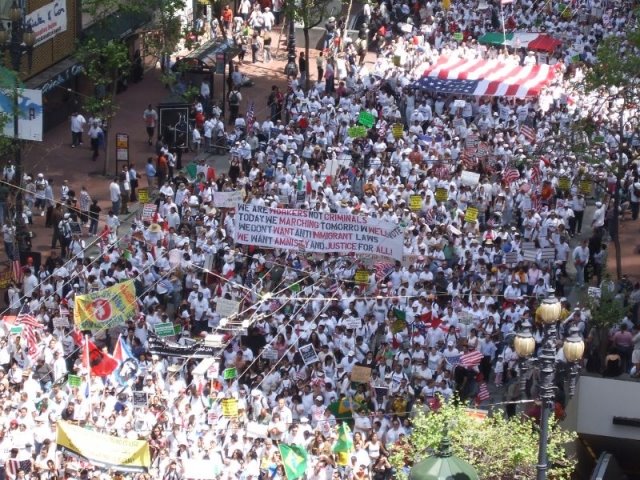
More info:
www.cirnow.org/
Go here for more detailed info and to find your senators phone numbers:
www.justiceforimmigrants.org/action.html
Please take a little time to call your senators. For real this stuff they are trying to pass it going to affect all of us. Like new ID cards with tracking devices. It doesnt take much to call and call often. Leave a message and just let them know that you support legalization and human rights...or go to one of these websites that support possitive immigration legislation to get more info on the specifics. I called yesterday. You have no idea how important it is to call. This is how our legislators make their decisions by hearing from you in the form of a fax or a phone call they count it as representing a larger voice of dissent. For reals. REAL TALK. It doesnt take much time out of your day. Here's a local number for Feinstein 415-3930-0707
ITS THE VERY LEAST YOU CAN DO and its pretty simple. abrazos, la mayita
Wednesday, May 17, 2006
Tuesday, May 16, 2006
Immigration Action
Take Action Now!
Please Contact your Senators Today Regarding S. 2611, The Comprehensive Immigration Reform Act of 2006
This week, the U.S. Senate will be considering S. 2611, the Comprehensive Immigration Reform Act (CIRA) of 2006. The legislation represents a positive step forward in enacting a comprehensive immigration reform bill before the end of the year. Over the next two weeks, the Senate will consider amendments to the legislation, both amendments which would improve the bill and those which would cause more harm to immigrants and refugees. It is important that the Catholic network weigh in on this important issue at such a critical juncture.
CIRA contains many positive provisions, including a legalization program which includes a path to citizenship for up to 10 million persons in Title VI; family unity provisions in Title V; and a temporary worker program in Title IV. However, it also contains overly punitive enforcement provisions in Title II of the bill. Moreover, it contains provisions which could preclude some of the undocumented population from qualifying for the legalization program. It is important that our elected officials receive the appropriate messages regarding this legislation. They include the following:
Legalization provisions: We support the provisions in Title VI which provide a path to citizenship for up to 10 million persons and the provisions in Titles IV (temporary worker program) and V (family-based immigration). However, we support changes in the bill to allow the maximum number of undocumented persons to qualify for a path to citizenship. These would include:
*
Restoration of protections for those persons who have resided in the country for 2-5 years and who would be required to go home prior to applying for a green card, including restoration of confidentiality in the process; a right to appeal adverse decisions; no waiver of rights, and an extension of the application deadline.
*
Creation of a realistic opportunity for those here 0-2 years to participate in the program, who under the bill must return home and apply through the temporary worker program, which could take years.
*
Removal of provisions which would render ineligible any person who commits document fraud or misrepresents fact on a I-9 application. (Undocumented immigrants without legal status often are compelled to misrepresent their status in order to obtain employment)
Enforcement Provisions: We also support amendments to the bill which would remove or ameliorate harsh enforcement provisions in Title II, including:
*
the expansion of the definition of an aggravated felony;
*
increased use of indiscriminate mandatory and indefinite detention;
*
removal of protections for asylum-seekers, refugees, and other vulnerable populations;
*
the authorization of local law enforcement to enforce federal immigration laws;
* limits on judicial review.
Please call your Senators regarding S. 2611.
Please write your Senators regarding S. 2611.
Please Contact your Senators Today Regarding S. 2611, The Comprehensive Immigration Reform Act of 2006
This week, the U.S. Senate will be considering S. 2611, the Comprehensive Immigration Reform Act (CIRA) of 2006. The legislation represents a positive step forward in enacting a comprehensive immigration reform bill before the end of the year. Over the next two weeks, the Senate will consider amendments to the legislation, both amendments which would improve the bill and those which would cause more harm to immigrants and refugees. It is important that the Catholic network weigh in on this important issue at such a critical juncture.
CIRA contains many positive provisions, including a legalization program which includes a path to citizenship for up to 10 million persons in Title VI; family unity provisions in Title V; and a temporary worker program in Title IV. However, it also contains overly punitive enforcement provisions in Title II of the bill. Moreover, it contains provisions which could preclude some of the undocumented population from qualifying for the legalization program. It is important that our elected officials receive the appropriate messages regarding this legislation. They include the following:
Legalization provisions: We support the provisions in Title VI which provide a path to citizenship for up to 10 million persons and the provisions in Titles IV (temporary worker program) and V (family-based immigration). However, we support changes in the bill to allow the maximum number of undocumented persons to qualify for a path to citizenship. These would include:
*
Restoration of protections for those persons who have resided in the country for 2-5 years and who would be required to go home prior to applying for a green card, including restoration of confidentiality in the process; a right to appeal adverse decisions; no waiver of rights, and an extension of the application deadline.
*
Creation of a realistic opportunity for those here 0-2 years to participate in the program, who under the bill must return home and apply through the temporary worker program, which could take years.
*
Removal of provisions which would render ineligible any person who commits document fraud or misrepresents fact on a I-9 application. (Undocumented immigrants without legal status often are compelled to misrepresent their status in order to obtain employment)
Enforcement Provisions: We also support amendments to the bill which would remove or ameliorate harsh enforcement provisions in Title II, including:
*
the expansion of the definition of an aggravated felony;
*
increased use of indiscriminate mandatory and indefinite detention;
*
removal of protections for asylum-seekers, refugees, and other vulnerable populations;
*
the authorization of local law enforcement to enforce federal immigration laws;
* limits on judicial review.
Please call your Senators regarding S. 2611.
Please write your Senators regarding S. 2611.
Monday, May 15, 2006
Central America and Iraq
Grandin on Rumsfeld's Latin American Wild West Show( click on the link above to read more)
It was in Central America, remember, that President Ronald Reagan first actively faced off against the "Evil Empire." It was through Central American policy that the previously distinct strands of conservatism and neoconservatism first broke foreign bread (and foreign heads) together. It was the anvil upon which the ideas and constituencies that drive Bush's aggressive foreign policy today were first hammered out. It was the place that secular neocons and anti-communist militarists came together with the Christian New Right to oppose Catholicism's Liberation Theology, which, for them, was the radical Islam of its moment -- at a time when Reagan's CIA director was playing footsy in Afghanistan and elsewhere with the Islamic jihadists who would later be melded with the "axis of evil" into the War on Terror.
Central America was also where Republicans first embraced the idealist language of spreading "democracy" abroad as a key justification for an aggressive, violent, preemptive foreign policy. It was in relation to Central America that, through the Office of Public Diplomacy, the executive branch first used a full range of PR "perception management" techniques to sell a war -- again anticipating the media manipulation that led to the invasion of Iraq. Finally, it was in what became the Iran-Contra scandal that Republicans first tried to bypass many of the restrictions on the presidency put into place (however feebly) after Vietnam and Watergate, foreshadowing the vast, half-secret expansion of executive powers in the last five years. Not for nothing did so many of the current administration's officials and hangers on -- John Negroponte, Elliot Abrams, Otto Reich, Donald Kagan, Michael Ledeen, even John Bolton -- come out of Central America. It is a story that must be read, as must Grandin's piece on U.S. war-planning in recalcitrant Latin America.
Saturday, May 13, 2006
Youth go to ES
Youth want to reconnect with their roots. We all need to do that at some point! Help out if you can or pass it on anyway. M
*Please repost and forward it to everyone you think might help.*
Dear family,
I am writing to inform you of a special project that our organization is developing. As many of may know we started an on campus organization at San Francisco State University called C.A.S.A. (Central American Student Association). The organization was born out of a need for Central and South American representation on our campus. What makes our organization different from other Latino organizations is that we want to get involved in international issues and in specific in Central America. One of our goals and missions is to take delegations of high school and college level students back to their ancestral lands. This July we are taking our 4th delegation in less than 6 months. What makes this delegation so different from the previous 3 is that they are all high school students. This very exciting and important for us because we believe high school students are the future and we must as privileged university and professional Latinos and other ethnicities begin to take and active and leadership role in their lives.
We met some of these students in the week of action for immigrant rights this past March in front of the Federal Building in San Francisco. While some of our members were fasting for immigrant rights, these high school students were there, by our side supporting the cause, marching and making sure that the hunger strikers were ok. They made signs and they organized themselves in a peaceful way to protest the racist anti-immigrant reforms. They are not just high school students, they are young warriors from our communities who have stand up for our rights. We believe in these students and we have high hopes for them. Please help us raise funds for them to experience the culture and history of El Salvador.
I call upon all you out there that care about the future of our youth to support these students in their efforts to reconnect with their roots and reclaim their identities.
We are fundraising $800 per student, which includes the flight, meals and spending funds. Our total budget for 20 students is $16,000. These students are low income students and is almost impossible for their families to afford this much money for an educational trip to El Salvador, therefore your support is of great importance for this project.
Paz,
Gustavo
You can donate funds to our non-profit Avenues Project
and you can claim a tax-donation for your support. Tax Id .. 300035154.
____ Yes, I ____________________________ would like to donate __________ so that students can reconnect with their roots. Please add my name to the list of donors on your website (AvenuesProject.org), your community newsletter, and any materials you send out to the media.
Checks payable to: Avenues Project, re: El Salvador Roots Trip
Contact Info: 510.776.3740, razafilm@yahoo.com, teolol@avenuesproject.org, www.AvenuesProject.org
Below you will find an important letter from high school students and teachers that I am organizing with, we are raising funds to take 20 youth to El Salvador to connect with their roots.
Please read it, spread it like wild fire, and donate even $20. Everything helps......
Gustavo Choto (email: GustavAlexander@yahoo.com)
Organizer/Educator - C.A.S.A - SFSU (Central American Student Association San Francisco State Univerity)
East Oakland Community High School- Raza Film Class
The Avenues Project, an education non-profit organization (501 c.3)
8251 Fontaine Street Oakland, CA 94605
510.776.3740, razafilm@yahoo.com, www.AvenuesProject.org/
Dear Community Members and Supporters,
Twenty East Oakland Community High School students from the Raza Film Class are fundraising to travel to El Salvador this summer, but they need your help to make this dream a reality. Half of the students in the class are Central American and want to learn about their roots. We have family members who live in El Salvador, but we have never met them because traveling out there is very expensive. We want to learn about our country because we only know about El Salvador from pictures and stories. We want to live there for a couple of weeks and experience life in Central America. We are fundraising $800 per student, which includes the flight, meals and spending funds. Our total budget for 20 students is $16,000.
Some of the goals of our trip are helping our larger community. During this trip we will be helping the people there by making a bridge so that they can transport themselves from the countryside to the city. We will also help set up pipes so that they can get clean drinking water to their homes. We want to also visit and help out orphanages.
We need your support to help empower all of us and also allow us to meet/reunite with family members. We are all excited about going to El Salvador, but we cant make our dream come true without your support. We will be making a difference to the people of El Salvador, and it will change our lives, but we need your help. Thank you so much for your support.
Sincerely,
C.A.S.A. (Central American Student Association)
Raza Film Class- East Oakland Community High School
Raza Film Students
On the journey
to connect with our roots
in Central America.
Name of Students:
Yanina Vazquez- El Salvador
Yesenia Vazquez- El Salvador
Adrian Arias- El Salvador
Maite Arias- El Salvador
Adriana Vega- Mexico
Francisco Flores- Guatemala
German Flores- Guatemala
Maria Felix- Mexico
Luis Sanchez- Mexico
Luis Garcia- Mexico
Jose Gutierrez- Mexico
Jose Agredano- Mexico
Omar Escalante- El Salvador
Jocelyn Padilla- Honduras
Francisco Capuchino- Mexico
Gumaro Meza- Mexico
Ricardo Gomez- Mexico
Eric Maldonado- Mexico
Reyna Rodriguez- El Salvador
Organizer & Educator,
Gustavo Choto - El Salvador
*Please repost and forward it to everyone you think might help.*
Dear family,
I am writing to inform you of a special project that our organization is developing. As many of may know we started an on campus organization at San Francisco State University called C.A.S.A. (Central American Student Association). The organization was born out of a need for Central and South American representation on our campus. What makes our organization different from other Latino organizations is that we want to get involved in international issues and in specific in Central America. One of our goals and missions is to take delegations of high school and college level students back to their ancestral lands. This July we are taking our 4th delegation in less than 6 months. What makes this delegation so different from the previous 3 is that they are all high school students. This very exciting and important for us because we believe high school students are the future and we must as privileged university and professional Latinos and other ethnicities begin to take and active and leadership role in their lives.
We met some of these students in the week of action for immigrant rights this past March in front of the Federal Building in San Francisco. While some of our members were fasting for immigrant rights, these high school students were there, by our side supporting the cause, marching and making sure that the hunger strikers were ok. They made signs and they organized themselves in a peaceful way to protest the racist anti-immigrant reforms. They are not just high school students, they are young warriors from our communities who have stand up for our rights. We believe in these students and we have high hopes for them. Please help us raise funds for them to experience the culture and history of El Salvador.
I call upon all you out there that care about the future of our youth to support these students in their efforts to reconnect with their roots and reclaim their identities.
We are fundraising $800 per student, which includes the flight, meals and spending funds. Our total budget for 20 students is $16,000. These students are low income students and is almost impossible for their families to afford this much money for an educational trip to El Salvador, therefore your support is of great importance for this project.
Paz,
Gustavo
You can donate funds to our non-profit Avenues Project
and you can claim a tax-donation for your support. Tax Id .. 300035154.
____ Yes, I ____________________________ would like to donate __________ so that students can reconnect with their roots. Please add my name to the list of donors on your website (AvenuesProject.org), your community newsletter, and any materials you send out to the media.
Checks payable to: Avenues Project, re: El Salvador Roots Trip
Contact Info: 510.776.3740, razafilm@yahoo.com, teolol@avenuesproject.org, www.AvenuesProject.org
Below you will find an important letter from high school students and teachers that I am organizing with, we are raising funds to take 20 youth to El Salvador to connect with their roots.
Please read it, spread it like wild fire, and donate even $20. Everything helps......
Gustavo Choto (email: GustavAlexander@yahoo.com)
Organizer/Educator - C.A.S.A - SFSU (Central American Student Association San Francisco State Univerity)
East Oakland Community High School- Raza Film Class
The Avenues Project, an education non-profit organization (501 c.3)
8251 Fontaine Street Oakland, CA 94605
510.776.3740, razafilm@yahoo.com, www.AvenuesProject.org/
Dear Community Members and Supporters,
Twenty East Oakland Community High School students from the Raza Film Class are fundraising to travel to El Salvador this summer, but they need your help to make this dream a reality. Half of the students in the class are Central American and want to learn about their roots. We have family members who live in El Salvador, but we have never met them because traveling out there is very expensive. We want to learn about our country because we only know about El Salvador from pictures and stories. We want to live there for a couple of weeks and experience life in Central America. We are fundraising $800 per student, which includes the flight, meals and spending funds. Our total budget for 20 students is $16,000.
Some of the goals of our trip are helping our larger community. During this trip we will be helping the people there by making a bridge so that they can transport themselves from the countryside to the city. We will also help set up pipes so that they can get clean drinking water to their homes. We want to also visit and help out orphanages.
We need your support to help empower all of us and also allow us to meet/reunite with family members. We are all excited about going to El Salvador, but we cant make our dream come true without your support. We will be making a difference to the people of El Salvador, and it will change our lives, but we need your help. Thank you so much for your support.
Sincerely,
C.A.S.A. (Central American Student Association)
Raza Film Class- East Oakland Community High School
Raza Film Students
On the journey
to connect with our roots
in Central America.
Name of Students:
Yanina Vazquez- El Salvador
Yesenia Vazquez- El Salvador
Adrian Arias- El Salvador
Maite Arias- El Salvador
Adriana Vega- Mexico
Francisco Flores- Guatemala
German Flores- Guatemala
Maria Felix- Mexico
Luis Sanchez- Mexico
Luis Garcia- Mexico
Jose Gutierrez- Mexico
Jose Agredano- Mexico
Omar Escalante- El Salvador
Jocelyn Padilla- Honduras
Francisco Capuchino- Mexico
Gumaro Meza- Mexico
Ricardo Gomez- Mexico
Eric Maldonado- Mexico
Reyna Rodriguez- El Salvador
Organizer & Educator,
Gustavo Choto - El Salvador
Monday, May 08, 2006
'Sanctuary City' for Immigrants Gets Pricey
http://www.blogger.com/img/gl.link.gif
By KEN MAGUIRE, Associated Press Writer Sun May 7, 2:14 PM ET
CAMBRIDGE, Mass. - This famously liberal city is serving notice that illegal immigrants are welcome, even while Congress is considering tough new penalties. Police won't harass you. Education and health care are available.
ADVERTISEMENT
Here's the hitch: You probably can't afford to live here.
Back in 1985, when Cambridge first declared itself a "sanctuary city," rent control kept apartments affordable.
Today, however, Cambridge no longer has rent control; cheap apartments were turned into luxury condominiums and the city — home of Harvard and MIT — is among the most expensive places to live in the United States. The average rent for a one-bedroom apartment is around $1,400 a month.
By KEN MAGUIRE, Associated Press Writer Sun May 7, 2:14 PM ET
CAMBRIDGE, Mass. - This famously liberal city is serving notice that illegal immigrants are welcome, even while Congress is considering tough new penalties. Police won't harass you. Education and health care are available.
ADVERTISEMENT
Here's the hitch: You probably can't afford to live here.
Back in 1985, when Cambridge first declared itself a "sanctuary city," rent control kept apartments affordable.
Today, however, Cambridge no longer has rent control; cheap apartments were turned into luxury condominiums and the city — home of Harvard and MIT — is among the most expensive places to live in the United States. The average rent for a one-bedroom apartment is around $1,400 a month.
Saturday, May 06, 2006
Vos
EL VOSEO
En algunos países hispanoamericanos como Guatemala, Argentina, y algunas partes de Colombia, en vez de "tú" se dice "vos," y no se utilizan las terminaciones normales para la segunda persona del singular en el presente del indicativo, ni en el imperativo. Este es el llamado "voseo." Uds. no tienen obligación de utilizarlo ni de memorizar su conjugación, pero sí es conveniente que lo reconozcan:
PRESENTE tú piensas --> vos pensás, IMPERATIVO ¡piensa! --> ¡pensá!
PRESENTE tú comes --> vos comés, IMPERATIVO ¡come! --> ¡comé!
PRESENTE tú vienes --> vos venís, IMPERATIVO ¡ven! --> ¡vení!
Hay, sin embargo, una manera más facil de recordar todo esto:
PRESENTE
1. Tomen el infinitivo del verbo (pensar, comer, venir)
2. Quiten la "r" y pongan una "s" (pensas, comes, venis)
3. Añadan un acento a la última vocal (pensás, comés, venís)
IMPERATIVO
Igual que el presente pero no añadan la "s" (pensá, comé ...)
Hay muy pocas excepciones: tú eres --> vos sos
En algunos países hispanoamericanos como Guatemala, Argentina, y algunas partes de Colombia, en vez de "tú" se dice "vos," y no se utilizan las terminaciones normales para la segunda persona del singular en el presente del indicativo, ni en el imperativo. Este es el llamado "voseo." Uds. no tienen obligación de utilizarlo ni de memorizar su conjugación, pero sí es conveniente que lo reconozcan:
PRESENTE tú piensas --> vos pensás, IMPERATIVO ¡piensa! --> ¡pensá!
PRESENTE tú comes --> vos comés, IMPERATIVO ¡come! --> ¡comé!
PRESENTE tú vienes --> vos venís, IMPERATIVO ¡ven! --> ¡vení!
Hay, sin embargo, una manera más facil de recordar todo esto:
PRESENTE
1. Tomen el infinitivo del verbo (pensar, comer, venir)
2. Quiten la "r" y pongan una "s" (pensas, comes, venis)
3. Añadan un acento a la última vocal (pensás, comés, venís)
IMPERATIVO
Igual que el presente pero no añadan la "s" (pensá, comé ...)
Hay muy pocas excepciones: tú eres --> vos sos
Thursday, April 27, 2006
Arab/Iranian/Muslim Contingent-MAY1
May 1st Immigrant Rights Mobilization
Arab/Iranian/Muslim Contingent
NO WORK - NO SCHOOL - NO BUYING - NO SELLING
from philadelphia to san francisco, millions of
immigrants & allies will leave school and work, and
take the streets of the united states demanding
dignity and an end to immigrant attacks in congress.
from buenos aires to mexico city, there will be a
boycott of US products.
from tehran to sao paulo, millions will celebrate
international workers day.
WHERE WILL YOU BE?
MARCH WITH US -
Arab/Iranian/Muslim Contingent
Meet at 10:30 AM - YERBA BUENA GARDERNS
(Mission between 3rd & 4th)
Contingent will march with other immigrant groups and
meet up with the Rally and March at 11 AM Justin
Herman Plaza, Embarcadero.
for more information call ADC-SF at 415-861-7444 or go
to www.adcsf.org
Arab/Iranian/Muslim Contingent
NO WORK - NO SCHOOL - NO BUYING - NO SELLING
from philadelphia to san francisco, millions of
immigrants & allies will leave school and work, and
take the streets of the united states demanding
dignity and an end to immigrant attacks in congress.
from buenos aires to mexico city, there will be a
boycott of US products.
from tehran to sao paulo, millions will celebrate
international workers day.
WHERE WILL YOU BE?
MARCH WITH US -
Arab/Iranian/Muslim Contingent
Meet at 10:30 AM - YERBA BUENA GARDERNS
(Mission between 3rd & 4th)
Contingent will march with other immigrant groups and
meet up with the Rally and March at 11 AM Justin
Herman Plaza, Embarcadero.
for more information call ADC-SF at 415-861-7444 or go
to www.adcsf.org
Tuesday, April 18, 2006

Monday, April 17, 2006
SPECIAL ISSUE: CENTRAL AMERICA
Millions of Central Americans live and work in North America. This
Special Issue looks at what caused the migration flows to El Norte and
the impacts of Central American migration on both home and host
societies.
Top story:
Central America: Crossroads of the Americas
Many migratory streams from Central America -- including refugees,
economic migrants, and transit flows headed north from South America
and
elsewhere -- have converged in North America since the 1980s. Sarah J.
Mahler and Dusan Ugrina of Florida International University outline the
region's main trends.
Spotlight:
Central American Foreign Born in the United States
Over
half of all Central American foreign born in the United States are from
El Salvador and Guatemala. MPI's Megan Davy examines the numbers as
well
as events and policies that have shaped Central American migration.
Country Profile:
Guatemala: Economic Migrants Replace Political Refugees
Guatemala's long civil war, which spurred large flows of refugees, has
given way to high levels of economic migration to the United States and
an economy more dependent on remittances. Also, Guatemala's geography
has made it a prime transit country for migrants headed north, as James
Smith of Inforpress Centroamericana reports.
Mexico: Caught Between the United States and Central America
Since the 1980s, Mexico has become home to Guatemalan refugees and served as
a transit country for Central Americans seeking to reach the United
States. Manuel Ángel Castillo of El Colegio de México analyzes Mexico's
policies toward its southern neighbors.
Canada: A Northern Refuge for Central Americans
Although most Central American refugees sought protection in the United
States, Canada admitted thousands of Central American refugees in the
1980s. María Cristina García of Cornell University takes a detailed
look at Central Americans in Canada.
Remittance Trends in Central America
In 2004, Central American countries received US$ 7.8 billion in
remittances through official channels. Are remittances hurting or
helping the region? MPI's Dovelyn Agunias investigates.
Migration and Development in El Salvador: Ideals Versus Reality
Salvadorans abroad have helped their families economically and, to some
extent, decreased poverty levels back home. Yet migration has economic
and social costs in El Salvador -- and has not yet proved to be the
answer to its development problems, according to Katharine
Andrade-Eekhoff.
CAFTA: What Could It Mean for Migration?
The Central America Free Trade Agreement may be the most important
economic event in the region in 20 years. However, it seems unlikely to
reverse established migration trends, reports Salomon Cohen.
Central Americans and Asylum Policy in the Reagan Era
Not long after the United States passed the 1980 Refugee Act, thousands
of people began fleeing civil war in Guatemala, El Salvador, and
Nicaragua. Their treatment in the United States, linked to US foreign
policy, spurred the Sanctuary Movement and efforts to grant them
refugee
status, as Susan Gzesh of the University of Chicago explains.
National Policies and the Rise of Transnational Gangs
The growth of violent gangs such as MS-13, which operates in the United
States and Central America, has caught the attention of the US media
and law enforcement. However, the role of migration policies in this growth
deserves closer attention, finds MPI's Mary Helen Johnson.
Policy Beat:
Senate Debates Temporary Worker Program and Path to Legal Status for
the Unauthorized
MPI's Julia Gelatt reports on the Judiciary Committee's proposals for
immigration reform, which set the stage for Senate debate on the topic,
plus other immigration news.
Archives
Special Issues:
Don't forget to visit our previous Special Issues on:
The Top 10 Migration Issues of 2005
The Unauthorized
Human Rights and Migration
Africa
and Migration
US-Mexico Migration
Women and Migration
Integration and Immigrants
Migration and Development
Join Our List
If a friend has forwarded this email to you and you would like to
continue receiving these updates, you can subscribe by clicking on the
link below.
http://www.migrationinformation.org/subscribe.cfm
On behalf of the Source team, thank you for your comments and
suggestions.
Kirin Kalia
Editor
The Migration Information Source is a project of the Migration Policy
Institute (MPI).
email: source@migrationpolicy.org
Special Issue looks at what caused the migration flows to El Norte and
the impacts of Central American migration on both home and host
societies.
Top story:
Central America: Crossroads of the Americas
Many migratory streams from Central America -- including refugees,
economic migrants, and transit flows headed north from South America
and
elsewhere -- have converged in North America since the 1980s. Sarah J.
Mahler and Dusan Ugrina of Florida International University outline the
region's main trends.
Spotlight:
Central American Foreign Born in the United States
Over
half of all Central American foreign born in the United States are from
El Salvador and Guatemala. MPI's Megan Davy examines the numbers as
well
as events and policies that have shaped Central American migration.
Country Profile:
Guatemala: Economic Migrants Replace Political Refugees
Guatemala's long civil war, which spurred large flows of refugees, has
given way to high levels of economic migration to the United States and
an economy more dependent on remittances. Also, Guatemala's geography
has made it a prime transit country for migrants headed north, as James
Smith of Inforpress Centroamericana reports.
Mexico: Caught Between the United States and Central America
Since the 1980s, Mexico has become home to Guatemalan refugees and served as
a transit country for Central Americans seeking to reach the United
States. Manuel Ángel Castillo of El Colegio de México analyzes Mexico's
policies toward its southern neighbors.
Canada: A Northern Refuge for Central Americans
Although most Central American refugees sought protection in the United
States, Canada admitted thousands of Central American refugees in the
1980s. María Cristina García of Cornell University takes a detailed
look at Central Americans in Canada.
Remittance Trends in Central America
In 2004, Central American countries received US$ 7.8 billion in
remittances through official channels. Are remittances hurting or
helping the region? MPI's Dovelyn Agunias investigates.
Migration and Development in El Salvador: Ideals Versus Reality
Salvadorans abroad have helped their families economically and, to some
extent, decreased poverty levels back home. Yet migration has economic
and social costs in El Salvador -- and has not yet proved to be the
answer to its development problems, according to Katharine
Andrade-Eekhoff.
CAFTA: What Could It Mean for Migration?
The Central America Free Trade Agreement may be the most important
economic event in the region in 20 years. However, it seems unlikely to
reverse established migration trends, reports Salomon Cohen.
Central Americans and Asylum Policy in the Reagan Era
Not long after the United States passed the 1980 Refugee Act, thousands
of people began fleeing civil war in Guatemala, El Salvador, and
Nicaragua. Their treatment in the United States, linked to US foreign
policy, spurred the Sanctuary Movement and efforts to grant them
refugee
status, as Susan Gzesh of the University of Chicago explains.
National Policies and the Rise of Transnational Gangs
The growth of violent gangs such as MS-13, which operates in the United
States and Central America, has caught the attention of the US media
and law enforcement. However, the role of migration policies in this growth
deserves closer attention, finds MPI's Mary Helen Johnson.
Policy Beat:
Senate Debates Temporary Worker Program and Path to Legal Status for
the Unauthorized
MPI's Julia Gelatt reports on the Judiciary Committee's proposals for
immigration reform, which set the stage for Senate debate on the topic,
plus other immigration news.
Archives
Special Issues:
Don't forget to visit our previous Special Issues on:
The Top 10 Migration Issues of 2005
The Unauthorized
Human Rights and Migration
Africa
and Migration
US-Mexico Migration
Women and Migration
Integration and Immigrants
Migration and Development
Join Our List
If a friend has forwarded this email to you and you would like to
continue receiving these updates, you can subscribe by clicking on the
link below.
http://www.migrationinformation.org/subscribe.cfm
On behalf of the Source team, thank you for your comments and
suggestions.
Kirin Kalia
Editor
The Migration Information Source is a project of the Migration Policy
Institute (MPI).
email: source@migrationpolicy.org
Sunday, April 16, 2006
Performance Art Immigration Festival

The Central American Studies Program
Performance Art Immigration Festival
Monday, April 17, 2006
6:00p.m.
With an update on High School Student Movement
coordinated by the Movimiento Estudiantil Chicano de Aztlán (MEChA)
Key Note Speaker:
Prof. Ana Patricia Rodríguez,
University of Maryland, College Park
"¿Dónde estás vos/z?: Performing Salvadoreñidades in Translocal Sites"
Performance and Visual Artists:
Jessica Grande
Lizette Hernandez
Víctor Espinosa
Carlos Somoza
Luis A. Vega
María Adela Díaz
Followed by a reception hosted by the Central American United Student Association (CAUSA)
Whitsett Room
Monday, April 17, 2006 6:00p.m.
California State University
Central American Studies Program
18111 Nordhoff Street
Northridge, CA 91330-8246
Tel. (818) 677-3585
Fax (818) 677-7578
Sunday, April 09, 2006
website for rights for students
This website has some useful information including a student free speech rights section and some contact info for the national lawyers guild for students that need legal help because of their walkout actions.
Please distribute widely.
-----FOR THE STUDENTS WEBSITE - Posted 4.6.06
A new committee has been formed in response to the recent student activities. This group is composed of teachers, students, parents and professionals who feel that "education is a right, not a privilege", and that students inherently have the right to voice their opinions. In this committee are people who were active in the 1968 Walkouts, such as Bobby Verdugo, Paula Cristosomo and Mita Cuaron. We invite the community to help us in the students of our youth. Please check out the new web page !!
http://forthestudents06.tripod.com
Please distribute widely.
-----FOR THE STUDENTS WEBSITE - Posted 4.6.06
A new committee has been formed in response to the recent student activities. This group is composed of teachers, students, parents and professionals who feel that "education is a right, not a privilege", and that students inherently have the right to voice their opinions. In this committee are people who were active in the 1968 Walkouts, such as Bobby Verdugo, Paula Cristosomo and Mita Cuaron. We invite the community to help us in the students of our youth. Please check out the new web page !!
http://forthestudents06.tripod.com
Saturday, April 08, 2006
A tragedy because of the lack of support/understanding
Very sad news. This should not happen.
FOR IMMEDIATE RELEASE
NEWS CONFERENCE
Sunday, April 9, 2006
12:00 p.m.
Our Lady of Guadalupe Church
710 S. Sultana Ave., Ontario, CA 91761
Louise Corales, whose 14 year-old son, Anthony Soltero, died on April 1 after committing suicide, will speak to the community and ask for a prayer for her son this Sunday, following the 11:00 a.m. mass at Our Lady of Guadalupe Church in Ontario, California.
Eighth grader Anthony Soltero shot himself through the head on Thursday, March 30, after the assistant principal at De Anza Middle School told him that he was going to prison for three years because of his involvement as an organizer of the April 28 school walk-outs to protest the anti-immigrant legislation in Washington. The vice principal also forbade Anthony from attending graduation activities and threatened to fine his mother for Anthonys truancy and participation in the student protests.
Anthony was learning about the importance of civic duties and rights in his eighth grade class. Ironically, he died because the vice principal at his school threatened him for speaking out and exercising those rights, Ms. Corales said today. I want to speak out to other parents, whose children are attending the continuing protests this week. We have to let the schools know that they cant punish our children for exercising their rights.
Anthonys death is likely the first fatality arising from the protests against the immigration legislation being considered in Washington, D.C. Anthony, who was a very good student at De Anza Middle School in the Ontario-Montclair School District, believed in justice and was passionate about the immigration issue. He is survived by his mother, Louise Corales, his father, a younger sister, and a baby brother.
Ms. Corales will speak to the community after mass on Sunday, April 9, 2006 at 12:00 p.m. at Our Lady of Guadalupe Church. She will ask for a prayer for Anthony, whose funeral and burial are scheduled for Monday, April 10 in Long Beach, where he was born.
CONTACT: R. SAMUEL PAZ
(310) 410-2981
(310) 989-6815
R. Samuel Paz
Civil Rights Lawyer
LAW OFFICES OF R. SAMUEL PAZ
Buckingham Heights
5701 W. Slauson Avenue
Suite 202
Culver City CA 90230
Telephone (310) 410-2981
Facsimile (310) 410-2957
FOR IMMEDIATE RELEASE
NEWS CONFERENCE
Sunday, April 9, 2006
12:00 p.m.
Our Lady of Guadalupe Church
710 S. Sultana Ave., Ontario, CA 91761
Louise Corales, whose 14 year-old son, Anthony Soltero, died on April 1 after committing suicide, will speak to the community and ask for a prayer for her son this Sunday, following the 11:00 a.m. mass at Our Lady of Guadalupe Church in Ontario, California.
Eighth grader Anthony Soltero shot himself through the head on Thursday, March 30, after the assistant principal at De Anza Middle School told him that he was going to prison for three years because of his involvement as an organizer of the April 28 school walk-outs to protest the anti-immigrant legislation in Washington. The vice principal also forbade Anthony from attending graduation activities and threatened to fine his mother for Anthonys truancy and participation in the student protests.
Anthony was learning about the importance of civic duties and rights in his eighth grade class. Ironically, he died because the vice principal at his school threatened him for speaking out and exercising those rights, Ms. Corales said today. I want to speak out to other parents, whose children are attending the continuing protests this week. We have to let the schools know that they cant punish our children for exercising their rights.
Anthonys death is likely the first fatality arising from the protests against the immigration legislation being considered in Washington, D.C. Anthony, who was a very good student at De Anza Middle School in the Ontario-Montclair School District, believed in justice and was passionate about the immigration issue. He is survived by his mother, Louise Corales, his father, a younger sister, and a baby brother.
Ms. Corales will speak to the community after mass on Sunday, April 9, 2006 at 12:00 p.m. at Our Lady of Guadalupe Church. She will ask for a prayer for Anthony, whose funeral and burial are scheduled for Monday, April 10 in Long Beach, where he was born.
CONTACT: R. SAMUEL PAZ
(310) 410-2981
(310) 989-6815
R. Samuel Paz
Civil Rights Lawyer
LAW OFFICES OF R. SAMUEL PAZ
Buckingham Heights
5701 W. Slauson Avenue
Suite 202
Culver City CA 90230
Telephone (310) 410-2981
Facsimile (310) 410-2957
Friday, April 07, 2006
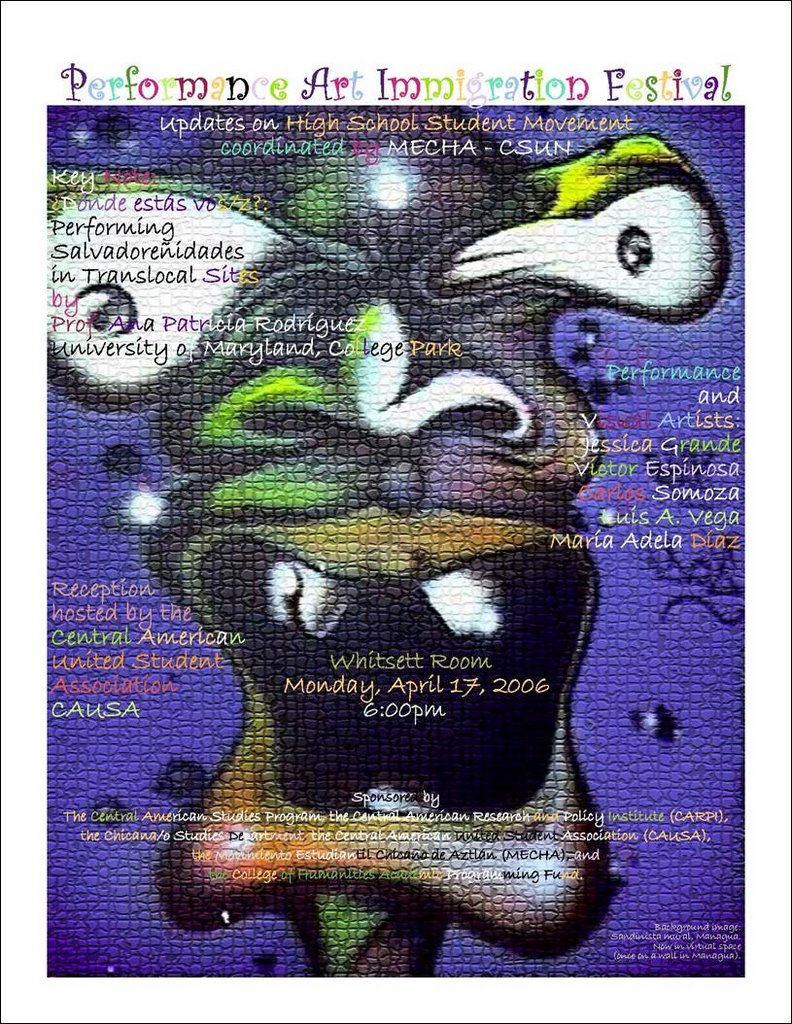
Wednesday, April 05, 2006
Justice not IGNORANCE NOW

Subject: commonly used attacks against immigrants
Body: Myths vs. Facts
IMMIGRANTS DONT PAY TAXES
Immigrants pay taxes, in the form of income, property, sales, and taxes at the federal and state level. As far as income tax payments go, sources vary in their accounts, but a range of studies find that immigrants pay between $90 and $140 billion a year in federal, state, and local taxes. Undocumented immigrants pay income taxes as well, as evidenced by the Social Security Administration's "suspense file" (taxes that cannot be matched to workers' names and social security numbers), which grew by $20 billion between 1990 and 1998
(Source: http://www.immigrationforum.org/about/articles/tax_study.htm)
IMMIGRANTS COME HERE TO TAKE WELFARE
Immigrants come to work and reunite with family members. Immigrant labor force participation is consistently higher than native-born, and immigrant workers make up a larger share of the U.S. labor force (12.4%) than they do the U.S. population (11.5%). Moreover, the ratio between immigrant use of public benefits and the amount of taxes they pay is consistently favorable to the U.S. In one estimate, immigrants earn about $240 billion a year, pay about $90 billion a year in taxes, and use about $5 billion in public benefits. In another cut of the data, immigrant tax payments total $20 to $30 billion more than the amount of government services they use.
(Source: "Questioning Immigration Policy – Can We Afford to Open Our Arms?", Friends Committee on National Legislation Document ..G-606-DOM, January 25, 1996. http:www.fas.org/pub/gen/fcnl/immigra.html)
IMMIGRANTS SEND ALL THEIR MONEY BACK HOME
In addition to the consumer spending of immigrant households, immigrants and their businesses contribute $162 billion in tax revenue to U.S. federal, state, and local governments. While it is true that immigrants remit billions of dollars a year to their home countries, this is one of the most targeted and effective forms of direct foreign investment.
(Source: http://www.cato.org/research/articles/griswold-020218.html.)
IMMIGRANTS TAKE JOBS AWAY FROM AMERICANS...
THIS ONE IS MY FAVORITE...CARLOS MENCIA SAID IT BEST...
" IF AN IMMIGRANT THAT CAN'T EVEN SPEAK ENGLISH IS TAKING YOUR JOB..YOU ARE ONE STUPID MOTHERFUCKER...." Does anyone have the right to claim a job 'belongs' to them?
The largest wave of immigration to the U.S. since the early 1900s coincided with our lowest national unemployment rate and fastest economic growth. Immigrant entrepreneurs create jobs for U.S. and foreign workers, and foreign-born students allow many U.S. graduate programs to keep their doors open. While there has been no comprehensive study done of immigrant-owned businesses, we have countless examples: in Silicon Valley, companies begun by Chinese and Indian immigrants generated more than $19.5 billion in sales and nearly 73,000 jobs in 2000.
(Source: Richard Vedder, Lowell Gallaway, and Stephen Moore, Immigration and Unemployment: New Evidence, Alexis de Tocqueville Institution, Arlington, VA (Mar. 1994), p. 13.
IMMIGRANTS ARE A DRAIN ON THE ECONOMY
During the 1990s, half of all new workers were foreign-born, filling gaps left by native-born workers in both the high- and low-skill ends of the spectrum. Immigrants fill jobs in key sectors, start their own businesses, and contribute to a thriving economy. The net benefit of immigration to the U.S. is nearly $10 billion annually. As Alan Greenspan points out, 70% of immigrants arrive in prime working age. That means we haven't spent a penny on their education, yet they are transplanted into our workforce and will contribute $500 billion toward our social security system over the next 20 years
(Source: Andrew Sum, Mykhaylo Trubskyy, Ishwar Khatiwada, et al., Immigrant Workers in the New England Labor Market: Implications for Workforce Development Policy, Center for Labor Market Studies, Northeastern University, Boston, Prepared for the New England Regional Office, the Employment and Training Administration, and the U.S. Department of Labor, Boston, Massachusetts, October 2002.
http://www.nupr.neu.edu/1102/immigration.PDF..search='center%20for%20labor%20market%20studies%20at%20Northeastern%20University%20studies')
IMMIGRANTS DONT WANT TO LEARN ENGLISH OR BECOME AMERICANS
Within ten years of arrival, more than 75% of immigrants speak English well; moreover, demand for English classes at the adult level far exceeds supply. Greater than 33% of immigrants are naturalized citizens; given increased immigration in the 1990s, this figure will rise as more legal permanent residents become eligible for naturalization in the coming years. The number of immigrants naturalizing spiked sharply after two events: enactment of immigration and welfare reform laws in 1996, and the terrorist attacks in 2001.
(Source: American Immigration Lawyers Association, "Myths & Facts in the Immigration Debate", 8/14/03. http://www.aila.org/contentViewer.aspx?bc=17,142..section4)
(Source: Simon Romero and Janet Elder, "Hispanics in the US Report Optimism" New York Times, (Aug. 6, 2003).
TODAY'S IMMIGRANTS ARE DIFFERENT THAN THOSE 100 YEARS AGO
The percentage of the U.S. population that is foreign-born now stands at 11.5%; in the early 20th century it was approximately 15%. Similar to accusations about today's immigrants, those of 100 years ago initially often settled in mono-ethnic neighborhoods, spoke their native languages, and built up newspapers and businesses that catered to their fellow émigrés. They also experienced the same types of discrimination that today's immigrants face, and integrated within American culture at a similar rate. If we view history objectively, we remember that every new wave of immigrants has been met with suspicion and doubt and yet, ultimately, every past wave of immigrants has been vindicated and saluted.
(Source: Census Data: http://www.census.gov/prod/2002pubs/c2kprof00-us.pdf,http://www.census.gov/prod/2002pubs/censr-4.pdf )
MOST IMMIGRANTS CROSS THE BORDER ILLEGALLY
Around 75% of today's immigrants have legal permanent (immigrant) visas; of the 25% that are undocumented, 40% overstayed temporary (non-immigrant) visas.
(Source: Department of Homeland Security (http://uscis.gov/graphics/shared/statistics/index.htm)
WEAK US BORDER ENFORCEMENT HAS LEAD TO HIGH UNDOCUMENTAED IMMIGRATION
From 1986 to 1998, the Border Patrol's budget increased six-fold and the number of agents stationed on our southwest border doubled to 8,500. The Border Patrol also toughened its enforcement strategy, heavily fortifying typical urban entry points and pushing migrants into dangerous desert areas, in hopes of deterring crossings. Instead, the undocumented immigrant population doubled in that timeframe, to 8 million—despite the legalization of nearly 3 million immigrants after the enactment of the Immigration Reform and Control Act in 1986. Insufficient legal avenues for immigrants to enter the U.S., compared with the number of jobs in need of workers, has significantly contributed to this current conundrum.
(Source: Immigration and Naturalization website: http://www.ncjrs.org/ondcppubs/publications/enforce/border/ins_3.html)
THE WAR ON TERRORISM CAN BE WON WITH IMMIGRANT RESTRICTIONS
No security expert since September 11th, 2001 has said that restrictive immigration measures would have prevented the terrorist attacks—instead, the key is effective use of good intelligence. Most of the 9/11 hijackers were here on legal visas. Since 9/11, the myriad of measures targeting immigrants in the name of national security have netted no terrorism prosecutions. In fact, several of these measures could have the opposite effect and actually make us less safe, as targeted communities of immigrants are afraid to come forward with information.
(Source: Associated Press/Dow Jones Newswires, "US Senate Subcommittee Hears Immigration Testimony", Oct. 17, 2001.)
(Source: Cato Institute: "Don't Blame Immigrants for Terrorism", Daniel Griswold, Assoc. Director of Cato Institute's Center for Trade Policy Studies (see: http://www.cato.org/dailys/10-23-01.html)
information provided by: http://www.justiceforimmigrants.org
Monday, April 03, 2006
Mario Escobar has had his deportation hearing delayed twice.
Student’s fate depends on overburdened court
EUNICE KWON/daily bruin
Mario Escobar has had his deportation hearing delayed twice.
By Adam Foxman
DAILY BRUIN STAFF
afoxman@media.ucla.edu
As thousands across the nation took to the streets last Tuesday to protest legislation that would increase penalties against undocumented immigrants, Mario Escobar paced nervously in front of the Los Angeles Immigration Court on Olive Street.
He was waiting for a judge to either deport him to El Salvador, from which he fled following the country's civil war, or grant him political asylum.
Neither happened, as it turned out.
More than a year after Escobar's court date was delayed the first time, the fourth-year English and Spanish student's deportation hearing was pushed back for an additional six months.
Judge William Martin Jr. was prepared to hear the case Tuesday, and Escobar – with his wife, his psychologist and a friend in tow – had come to the courtroom expecting resolution in his bid for political asylum.
But the case was delayed because the counsel for the U.S. Department of Homeland Security did not have his file.
Kristin Piepmeier, the U.S. government's counsel, told Martin she did not have Escobar's file because, though she had ordered it on March 17, it was accidently sent to the National Records Center in Missouri.
"I made a mistake," Piepmeier said, explaining that she expected the file to arrive "any day now."
The judge, visibly frustrated, expressed dismay at having to delay the case after setting aside plenty of time to hear the counsel's position as well as Escobar's defense and testimony from his psychologist.
He urged Escobar's lawyer to work toward an agreement with the counsel in order to more quickly settle the case, and he rescheduled the hearing for Sept. 13.
Escobar, who was in tears hours before the scheduled hearing, said the postponement made him want to scream.
"I'm still in the same predicament," he said. "All I want is for this nightmare to be over."
Escobar, who is an undocumented immigrant from El Salvador, fled from his home country to the United States more than a decade ago. He is applying for political sanctuary based on the trauma he suffered during El Salvador's civil war.
His father and grandmother were killed in that conflict, which lasted from about 1979 to 1992. And as an 11-year-old near the end of the war, Escobar was kidnapped and held for almost a year by former members of the Salvadorian military.
Escobar's hearing was not the only one postponed Tuesday. An asylum hearing scheduled immediately before his was also pushed back for six months.
Delays are common in Los Angeles' immigration court, and with a steady increase in immigration cases nationwide in recent years, the situation appears unlikely to improve.
For Escobar, a delayed hearing means more months of anxiety, he said, explaining that his unresolved case is also impeding upon his efforts to become a professor.
During his time at UCLA, the 28-year-old student took early steps down that path. He gave a lecture at UC Santa Barbara on the difficulties Central Americans face in the United States, and spoke about Roque Dalton, a Salvadorian poet, at California State University, Northridge.
He is also scheduled to speak on April 7 at the Salvadorian Embassy in Washington, D.C., about a literary magazine he established as a forum for Central American issues.
But because of his status as an undocumented immigrant, he has had to turn down offers to speak in El Salvador and Canada, and he has had difficulty securing fellowships, he said.
Escobar is one of an estimated 11 million undocumented immigrants in the United States at whom the Senate and the House are aiming controversial immigration-reform proposals.
The differences in the two proposals illustrate the deep ideological divide – in both Congress and the country at large – over issues of illegal immigration.
The Senate Judiciary Committee recently released a proposal that would give many current undocumented immigrants a path to citizenship and establish a guest-worker program.
In contrast, the House's bill, passed late last year, would increase penalties for illegal immigration and erect a 700-mile-long wall between the United States and Mexico.
Opponents of the Senate Judiciary Committee's proposal call it an amnesty for illegal immigrants. Critics of the more stringent bill passed by the House have said it is unnecessarily harsh, unenforceable and would split up many families who have undocumented members. Neither proposal is final, and as many of their provisions are in direct opposition, they are likely to see fierce debate in Congress before they can become law.
But either bill, if it goes into law as written, would likely have dramatic effects on the nation's immigration courts, which are already dealing with a growing number of cases.
Between 2004 and 2005, the country's immigration courts saw a 23 percent increase in the number of cases received nationwide, according to statistics compiled by the U.S. Department of Justice. The number of cases increased 31 percent from 2001 to 2005, from 282,396 to 368,848.
Los Angeles' court has 23 judges and received 17,182 cases in 2005.
The number in 2004 was 15,281.
And in these busy courts, delays caused by administrative mistakes – like the one Escobar experienced – are not uncommon, according to several immigration lawyers.
Armineh Ebrahimian, Escobar's lawyer, said delays of all types are common in Los Angeles' court.
And Joren Lyons, an attorney with the San Francisco-based Asian Law Caucus, said that though San Francisco's immigration court generally runs smoothly, cases are sometimes postponed because of missing or misplaced files.
If the House's bill becomes law, immigration courts could see an additional influx of cases.
The House bill, HR4437, includes a provision that would make it a felony to be an illegal resident of the United States, and would make providing assistance to illegal immigrants a felony as well.
Since the House bill seeks to crack down on illegal immigration it would, if passed, ramp up deportations and have a "severe impact on the dockets of the courts," Lyons said.
Lyons also said the path toward legalization opened by the Senate Judiciary Committee's proposal could lessen strain on immigration courts. But some facets of the proposal could increase pressure on the courts.
The Senate Judiciary Committee's proposal, for example, would allow for re-evaluations of undocumented immigrants' criminal records, which could lead to deportations based on past offenses, according to analysis of the proposal by the Immigrant Legal Resource Center.
This provision could increase deportations and lessen the discretion immigration judges can exercise, thereby increasing strain on the courts, Lyons said.
EUNICE KWON/daily bruin
Mario Escobar has had his deportation hearing delayed twice.
By Adam Foxman
DAILY BRUIN STAFF
afoxman@media.ucla.edu
As thousands across the nation took to the streets last Tuesday to protest legislation that would increase penalties against undocumented immigrants, Mario Escobar paced nervously in front of the Los Angeles Immigration Court on Olive Street.
He was waiting for a judge to either deport him to El Salvador, from which he fled following the country's civil war, or grant him political asylum.
Neither happened, as it turned out.
More than a year after Escobar's court date was delayed the first time, the fourth-year English and Spanish student's deportation hearing was pushed back for an additional six months.
Judge William Martin Jr. was prepared to hear the case Tuesday, and Escobar – with his wife, his psychologist and a friend in tow – had come to the courtroom expecting resolution in his bid for political asylum.
But the case was delayed because the counsel for the U.S. Department of Homeland Security did not have his file.
Kristin Piepmeier, the U.S. government's counsel, told Martin she did not have Escobar's file because, though she had ordered it on March 17, it was accidently sent to the National Records Center in Missouri.
"I made a mistake," Piepmeier said, explaining that she expected the file to arrive "any day now."
The judge, visibly frustrated, expressed dismay at having to delay the case after setting aside plenty of time to hear the counsel's position as well as Escobar's defense and testimony from his psychologist.
He urged Escobar's lawyer to work toward an agreement with the counsel in order to more quickly settle the case, and he rescheduled the hearing for Sept. 13.
Escobar, who was in tears hours before the scheduled hearing, said the postponement made him want to scream.
"I'm still in the same predicament," he said. "All I want is for this nightmare to be over."
Escobar, who is an undocumented immigrant from El Salvador, fled from his home country to the United States more than a decade ago. He is applying for political sanctuary based on the trauma he suffered during El Salvador's civil war.
His father and grandmother were killed in that conflict, which lasted from about 1979 to 1992. And as an 11-year-old near the end of the war, Escobar was kidnapped and held for almost a year by former members of the Salvadorian military.
Escobar's hearing was not the only one postponed Tuesday. An asylum hearing scheduled immediately before his was also pushed back for six months.
Delays are common in Los Angeles' immigration court, and with a steady increase in immigration cases nationwide in recent years, the situation appears unlikely to improve.
For Escobar, a delayed hearing means more months of anxiety, he said, explaining that his unresolved case is also impeding upon his efforts to become a professor.
During his time at UCLA, the 28-year-old student took early steps down that path. He gave a lecture at UC Santa Barbara on the difficulties Central Americans face in the United States, and spoke about Roque Dalton, a Salvadorian poet, at California State University, Northridge.
He is also scheduled to speak on April 7 at the Salvadorian Embassy in Washington, D.C., about a literary magazine he established as a forum for Central American issues.
But because of his status as an undocumented immigrant, he has had to turn down offers to speak in El Salvador and Canada, and he has had difficulty securing fellowships, he said.
Escobar is one of an estimated 11 million undocumented immigrants in the United States at whom the Senate and the House are aiming controversial immigration-reform proposals.
The differences in the two proposals illustrate the deep ideological divide – in both Congress and the country at large – over issues of illegal immigration.
The Senate Judiciary Committee recently released a proposal that would give many current undocumented immigrants a path to citizenship and establish a guest-worker program.
In contrast, the House's bill, passed late last year, would increase penalties for illegal immigration and erect a 700-mile-long wall between the United States and Mexico.
Opponents of the Senate Judiciary Committee's proposal call it an amnesty for illegal immigrants. Critics of the more stringent bill passed by the House have said it is unnecessarily harsh, unenforceable and would split up many families who have undocumented members. Neither proposal is final, and as many of their provisions are in direct opposition, they are likely to see fierce debate in Congress before they can become law.
But either bill, if it goes into law as written, would likely have dramatic effects on the nation's immigration courts, which are already dealing with a growing number of cases.
Between 2004 and 2005, the country's immigration courts saw a 23 percent increase in the number of cases received nationwide, according to statistics compiled by the U.S. Department of Justice. The number of cases increased 31 percent from 2001 to 2005, from 282,396 to 368,848.
Los Angeles' court has 23 judges and received 17,182 cases in 2005.
The number in 2004 was 15,281.
And in these busy courts, delays caused by administrative mistakes – like the one Escobar experienced – are not uncommon, according to several immigration lawyers.
Armineh Ebrahimian, Escobar's lawyer, said delays of all types are common in Los Angeles' court.
And Joren Lyons, an attorney with the San Francisco-based Asian Law Caucus, said that though San Francisco's immigration court generally runs smoothly, cases are sometimes postponed because of missing or misplaced files.
If the House's bill becomes law, immigration courts could see an additional influx of cases.
The House bill, HR4437, includes a provision that would make it a felony to be an illegal resident of the United States, and would make providing assistance to illegal immigrants a felony as well.
Since the House bill seeks to crack down on illegal immigration it would, if passed, ramp up deportations and have a "severe impact on the dockets of the courts," Lyons said.
Lyons also said the path toward legalization opened by the Senate Judiciary Committee's proposal could lessen strain on immigration courts. But some facets of the proposal could increase pressure on the courts.
The Senate Judiciary Committee's proposal, for example, would allow for re-evaluations of undocumented immigrants' criminal records, which could lead to deportations based on past offenses, according to analysis of the proposal by the Immigrant Legal Resource Center.
This provision could increase deportations and lessen the discretion immigration judges can exercise, thereby increasing strain on the courts, Lyons said.
Tuesday, March 28, 2006
UCLA Students Face Threat of Deportation

Please epis, pray for me. Check the link
www.dailybruin.ucla.edu
March 20, 2006
By ADAM FOXMAN, Daily Bruin
(U-WIRE) LOS ANGELES -- Mario Escobar's boisterous laughter dies out as
he tells his story. As other University
of California at Los Angeles students focus on their final exams this
week, he also has to cope with the
possibility of being deported to a violent country.
"It's crazy; it's a hell," said Escobar, a fourth-year English and
Spanish student.
Escobar is one of dozens of UCLA students who are undocumented, meaning
that they do not have the
papers necessary to be legal residents of the United States. While
there
is no official count of such students,
an on-campus support group for undocumented students has nearly 60
members.
Like many undocumented students, Escobar came to the United States at
an
early age: He fled to the
United States from El Salvador after that country's civil war, which
lasted from 1979 to 1992. His father,
grandmother and cousins were killed in the conflict.
Escobar has applied for political asylum, but he has already been
denied
once, he said. The denial came
nearly a year ago. His second hearing with the immigration court is
scheduled for March 28, and if this
petition is rejected, he could be deported to El Salvador.
The prospect of deportation fills him with frustration and fear. And
while otherwise confident and articulate
in conversation, Escobar lapses into heavy silence at the mention of
his case.
"I refuse to think about it because if I do, then I know it will bring
me
down," he said.
Escobar, 28, has spent much of his life in the United States.
In addition to working his way to within a year of finishing a double
major at UCLA, he has started a family;
founded a fledgling publishing company called Cuzcatlan Press;
published
a volume of original poetry in
Spanish called "Gritos Interiores" ("Cries from Within"); and started a
literary magazine to give a voice to
what he calls the Central American diaspora. He published his book in
2005, and the first issue of the
magazine, called "La Nueva Tendencia" ("The New Tendency"), should be
in
stores by April.
As his court date approaches and he faces the possibility of being
thrown
out of his adopted country,
Escobar said he feels dislocated and trapped.
"I feel like an outcast, I feel marginalized," he said.
He is also frightened by the prospect of returning to El Salvador,
because more than a decade after the end
of that county's civil war, it remains a violent place.
In a 1999 report done for the World Bank, Amnesty International found
that more than 100 people out of
every 100,000 are killed in homicides each year in El Salvador. And in
1998, more than 200 in 100,000
Salvadorian men ages 15-34 were killed in homicides. By comparison,
California had 6.8 murders per
100,000 residents in 2003, according to the New York Times Almanac for
2006.
Escobar's situation is uncommon at UCLA, but it resonates with many
immigration issues being discussed on
a national level.
Lawmakers working on a major immigration bill, which is currently in
the
Senate Judiciary Committee, are
grappling with questions of how to cope with the millions of illegal
immigrants currently in the United States
and what to do with future newcomers.
Questions of residency are also highly charged at California's public
universities, where some undocumented
students pay in-state tuition as a result of AB 540, a California state
law that allows students who have
attended a California high school for three or more years to pay
resident
tuition.
Though some undocumented students qualify to pay in-state tuition under
AB 540, they cannot receive
federal or state financial aid under current California law. Still, the
law has led some to argue that
undocumented students are taking resources which should go to U.S.
citizens.
A class-action lawsuit filed in December against California public
colleges and universities charged that by
allowing undocumented students to pay in-state tuition, the
universities
were discriminating against U.S.
citizens. If the lawsuit succeeds, AB 540 could be repealed.
One story among many
While the particulars of Escobar's case are unique, his experience as
an
undocumented student is common,
said Roberto Manc'a, a professor of literature at Los Angeles Trade
Technical College.
"By telling Mario's story, (one is) telling the story of thousands of
other students," said Manc'a, who became
friends with Escobar when Escobar was studying at LATTC.
As Salvadorians, Escobar and Manc'a bonded over their common
experiences.
Like several of Escobar's other friends, Manc'a described him as gifted
and inspirational. But Manc'a said the
uncertainty of being without immigration papers weighs on his young
friend as it does on many
undocumented students.
It's like "a cloud that won't go away; a sense of hopelessness," Manc'a
said.
But Escobar and UCLA's other undocumented students have something
Manc'a
said is unique in his
experience: a support group.
The student-run group, called Ideas UCLA, seeks to provide a safe
environment for students to talk about a
subject often taboo even among friends and family -- their immigration
status.
The group has about 30 active members, and another 30 on its mailing
list, said Saray Gonzalez, the group's
co-chairwoman. Ideas UCLA's work to educate high school students about
AB
540 is funded by the
Community Activities Committee, which oversees funding for off-campus
projects.
Most, but not all, of Ideas' members are undocumented. Most are also
Latino, but the group has a member
each from Poland, Vietnam and Russia. The term undocumented is used
generally. For example, some
undocumented students may have work permits but not legal residency, or
may be in the process of
becoming naturalized.
Members help each other with everything from school to transportation,
work with UCLA staff members who
can advise them about subjects such as scholarships, and work to inform
undocumented high school students
about the opportunities available to them.
Students in the group rarely face deportation, but at least one group
member other than Escobar has faced
deportment proceedings, said Gonzalez, a fourth-year chemistry student.
The student who faced
deportation, now an alumnus, was ultimately able to stay in the United
States.
Though few UCLA students have faced deportation, the slim possibility
that someone might place a call to
immigration authorities encourages many undocumented students to hide
their status, Gonzalez said.
But the top concerns cited by members of Ideas UCLA included the
negative
perception of undocumented
individuals and financial difficulties.
"Being undocumented is highly stigmatizing," Gonzalez said.
When Ideas UCLA was founded in 2003, it gave form to a community many
undocumented students didn't
know they had.
"Now that Ideas exists it actually makes people more comfortable doing
a
lot of things. It gives people a
place to talk about their stories and know they are not alone," said
Tam
Tran a fourth-year American
literature and culture student who is a member of the group.
Manc'a, who often encounters undocumented students at LATTC, said the
information Escobar gave him
about the club has been a boon to his students.
"Knowing that other students are in a similar situation makes them
aware
that anything is possible. It makes
an incredible difference," he said.
Waiting for resolution
For all the similarities and differences Escobar's story bears toward
those of other undocumented students,
as he studies for finals this quarter he is also just a man who wants
to
know what will happen to him.
"The war (in El Salvador) ended in 1992, and still being in this
situation, I'm tired. I want this nightmare to
be over. I want to know what it feels like to be a citizen of a
country,"
he said.
As he waits for his deportation hearing, the literature student and
author takes solace in writing.
Books have always been both an escape and a tool to deal with the past,
he said.
"Literature has been, as we say in Spanish, 'la guarida' -- a safe
place.
... There, I can create my own
world," Escobar said.
Alicia Gaspar de Alba, a UCLA Chicana/o studies professor, once told
Escobar that by writing he could gain
authorship over his own life, and he believes he has.
Within the 115 pages of his book "Gritos Interiores," Escobar includes
poems that he wrote as long ago as
1992, and as recently as last year.
One of his early poems recalls the layered Russian doll, called a
matrioska, he carried as a child, wishing he
could hide inside it like one of the interior dolls as the sounds of
war
burst into his home in El Salvador.
Roughly translated from the Spanish in which it was written, the poem
reads:
"I walked, I walked, I walked, and at last I found you matrioska / Open
your body and let me hide inside
you."
In a more recent poem, Escobar described his feeling of desperation.
Seated against a pillar outside Rolfe Hall on Friday, he translated it:
"I have walked through the desert, burned, mutilated, and dead / I walk
like a shadow, hungry for an
eternal / smile / Giving a neglected cry / and rowing against the /
breeze."
Manc'a said in the nearly five years he has known Escobar, the poet has
progressed from an imitator of
Chilean poet Pablo Neruda to an author with a powerful voice of his
own.
And now, as he faces the
possibility of deportation, Escobar is working to put out "La Nueva
Tendencia" to give other Central
American writers a place to tell their stories.
"In a way Mario has been saying what I have wanted to say for a long
time," Manc'a said. "That we (Central
Americans) have a voice."
Friday, March 24, 2006
SF Hunger Strike & Week of Actions
Check out this blog on the SF hunger strike for Immigrant Rights.
Also check this link out at indymedia
Here is some more info at KRON
Also check this link out at indymedia
Here is some more info at KRON
MARCH & RALLY: March 25 LA
Be part of history this Saturday, March 25, it will be a big protest. All the radio Spanish DJ's are announcing it and the TV has also announced it. People got very energized aftr the March 10 Chicago mass march of over 100,000 people. Here people are expecting well over 100,000. We are organizing a SEIU 660 contingent. Service Empoyees International Union Local 660.
Here is the first announcement. More details later on exactly where to meet. Please get the word out.See you his Saturday.
JOIN
The SEIU Local 660 Contingent and
Over 100,000 People for a
MARCH & RALLY: March 25
Ending at City Hall
FOR HUMANE IMMIGRATION REFORM
URGE CONGRESS TO.
OPPOSE H.R. 4437:
STOP inhumane provisions, such as H.R. 4437, that would criminalize undocumented immigrants and those who assist them, including churches, unions, and family members--and undermines due process and civil liberties.
PASS HUMANE IMMIGRATION REFORM THAT:
· Offers a path to citizenship for undocumented immigrants
· Reunites families
· Protects Immigrant Workers' Rights
Saturday, March 25, 2006
10:00 AM
Olympic & Broadway
Put on your SEIU colors and look for the SEIU 660 banner! Bring your water, & walking shoes.
For more information call Carlos Montes cell (213) 276-8415, Saira Soto w (213) 368-8623
Here is the first announcement. More details later on exactly where to meet. Please get the word out.See you his Saturday.
JOIN
The SEIU Local 660 Contingent and
Over 100,000 People for a
MARCH & RALLY: March 25
Ending at City Hall
FOR HUMANE IMMIGRATION REFORM
URGE CONGRESS TO.
OPPOSE H.R. 4437:
STOP inhumane provisions, such as H.R. 4437, that would criminalize undocumented immigrants and those who assist them, including churches, unions, and family members--and undermines due process and civil liberties.
PASS HUMANE IMMIGRATION REFORM THAT:
· Offers a path to citizenship for undocumented immigrants
· Reunites families
· Protects Immigrant Workers' Rights
Saturday, March 25, 2006
10:00 AM
Olympic & Broadway
Put on your SEIU colors and look for the SEIU 660 banner! Bring your water, & walking shoes.
For more information call Carlos Montes cell (213) 276-8415, Saira Soto w (213) 368-8623
Monday, March 13, 2006
Disporic Central American Visibility Through Creative Discourse
We will be presenting our papers at the 2006 LASA conference in San Juan,Puerto Rico this wednesday March 15th at 8am at the The Caribe Hilton (Primary Congress Site) Conference Room 3
Queering Central-American Disaporic Identity in the Arts
Anayvette Martinez
Ethinic Studies, San Francisco State University
Cyber Central Americans:
The Hyphen in Cyberspace
Maya Chinchilla
Broadcast and Electronic Communication Arts, San Francisco State University
The Indigenous Abject and Displaced Mother, Transforming Self and Nation through La Siguanba
Karina Oliva-Alvarado
Ethnic Studies, University of California, Berkeley
Queering Central-American Disaporic Identity in the Arts
Anayvette Martinez
Ethinic Studies, San Francisco State University
Cyber Central Americans:
The Hyphen in Cyberspace
Maya Chinchilla
Broadcast and Electronic Communication Arts, San Francisco State University
The Indigenous Abject and Displaced Mother, Transforming Self and Nation through La Siguanba
Karina Oliva-Alvarado
Ethnic Studies, University of California, Berkeley
Sunday, March 12, 2006
A Mother's Loss Spurs War Debate
Thanks to Mario for sending this story. M
--------------------
El Salvador is the only Latin nation with troops still in Iraq.
Herminia
Ramos, whose son died there, doesn't
want others to suffer like her.
By Hector Tobar and Alex Renderos
Special to The Times
March 10 2006
GUAYAMANGO, El Salvador — The only thing Herminia Ramos wanted from
the army was her son's
pension — exactly $200 a month. She figured she deserved the money
now, seeing how he gave his
life wearing an army uniform, fighting in a war halfway around the
world
in Iraq.
The complete article can be viewed HERE
Visit latimes.com at http://www.latimes.com
--------------------
El Salvador is the only Latin nation with troops still in Iraq.
Herminia
Ramos, whose son died there, doesn't
want others to suffer like her.
By Hector Tobar and Alex Renderos
Special to The Times
March 10 2006
GUAYAMANGO, El Salvador — The only thing Herminia Ramos wanted from
the army was her son's
pension — exactly $200 a month. She figured she deserved the money
now, seeing how he gave his
life wearing an army uniform, fighting in a war halfway around the
world
in Iraq.
The complete article can be viewed HERE
Visit latimes.com at http://www.latimes.com
Monday, March 06, 2006
Women Without Borders

A conference by and for Central American women
Date: March 13, 2006
from 9:00am to 5:30pm
Event at CARECEN is from 6pm-mindnight
Location: Grand Salon University Student Union
California State University Northridge
18111 Nordhoff Ave. Northridge, CA 91331
Information: casas@csun.edu
(213)219-1044
Invited speakers:
Ellen Verryt
Centro de Prevencion,Tratamiento y Rehabilitacion de Victimas de Tortura y sus Familias
and
Pais Poesible
Honduras
Magdalena Sarat Pacheco
Movimiento de Jóvenes Mayas and Coordinadora Nacional de Viudas de Guatemala
Maria Adela Diaz
Artist
Guatemala
Rosa Maria Menjivar Peraza
Las dignas
El Salvador
Soraya Long
Center for Justice and Internacional Law
Costa Rica
Phyllis Cayetano
National Garifuna Council
Belize
This conference proudly sponsored by: Central American Studies Alumni Society (CASAS); Sin Fronteras, a non-profit organization serving youth; Central American United Student Association (CAUSA); Central American Resource Center (CARECEN); Contacto Ancestral; Olympic Mortgage; CSUN’s Associated Students, Central American Studies Program, Central American Research and Policy Institute, Chicana/o Studies, the Women’s Center and Women’s Studies.
Monday, February 27, 2006
Dalila

I wanted to share this website of a fellow epicentro poet and artist. Give it up to Dalila who continues to inspire us.
http://www.ixchelana.com/
Friday, February 24, 2006
CaRaCoL Marketplace

CaRaCoL Marketplace
"Working together to build a sustainable future"
"Working together to build a sustainable future"
Please join us this Sunday
February 26, 2006
10am - 3pm
Books, Clothes, Jewerly, Natural Body Care Products,
Art, Herbs, Healthy Food and Community
February 26, 2006
10am - 3pm
Books, Clothes, Jewerly, Natural Body Care Products,
Art, Herbs, Healthy Food and Community
All this and more at:
PROYECTO JARDIN
1718 Bridge St. Boyle Heights, ELA
(between State & Boyle, behind White Memorial Plaza I)
PROYECTO JARDIN
1718 Bridge St. Boyle Heights, ELA
(between State & Boyle, behind White Memorial Plaza I)
A free event for the whole family!
EVERYONE IS WELCOME!
EVERYONE IS WELCOME!
Thursday, February 23, 2006

Friday, February 10, 2006
Finding American Dream, in El Salvador
Thanks to Santiago Bernal for sending this article.
From the Los Angeles Times
Finding American Dream, in El Salvador
By Héctor Tobar
Times Staff Writer
February 9, 2006
SACACOYO, El Salvador - The 170 laborers ensconced at the Hacienda San Clemente here consider themselves the champion sugar cane cutting team of El Salvador.
They work seven days a week. The youngest and strongest of them can cut 12 tons of cane stalks in one shift.
"One day, I'm going to tell my children what we did here," Adrian Sanchez Corrales, 53, said proudly.
Salvadorans take pride in calling themselves the hardest-working people in Central America. But Sanchez Corrales and his team aren't from El Salvador; they're migrants from Honduras.
Thousands of Salvadorans have immigrated to the United States, legally and illegally, sparking a labor shortage in their homeland. In addition to the sheer number of workers lost, the dollars those immigrants send home discourage those who remain behind from performing low-paying, backbreaking labor like that of the sugar cane harvest.
The Hondurans at the Hacienda San Clemente are more than eager to fill the labor gap.
In November, Salvadoran Agriculture Minister Mario Salaverria announced that 15,000 foreign workers would be needed to complete the cane, cotton and coffee harvests here.
The labor shortages are being felt across the region. Mezcal producers in the Mexican state of Oaxaca, coffee plantations in Nicaragua and chile farmers in the central Mexican state of Zacatecas have found themselves in a similar predicament because so many local people have left to seek better wages elsewhere.
"The problem is that remittances [from the U.S.] have made Salvadorans comfortable and they don't want to work cutting cane," said Italo Escrich, harvest supervisor for the Central Izalco sugar refinery, which contracted the workers.
In addition to the Hondurans, who come from the province of Choluteca, Escrich also hired 25 Nicaraguan workers.
Traditionally, migration between the neighboring countries has gone in the other direction. In fact, the presence of thousands of Salvadoran immigrants in Honduras helped precipitate the 1969 "Soccer War" between the two nations. But for the poor of Honduras and Nicaragua today, Escrich said, "El Salvador has become the Central American dream." For the Hondurans, the relative abundance of El Salvador is, unlike the faraway United States, just a day's bus ride away.
People here get paid in dollars - El Salvador adopted the U.S. currency in 2001. The local currency, the colon, has all but disappeared from circulation. The Honduran migrants find that the dollars earned in El Salvador go much further when they are sent home and converted to Honduran lempiras.
"Here, a pound of cheese can cost you $3 or $4," said Jose de la Cruz, 22. "For that much money, I can get 3 pounds in Choluteca."
Raymundo Calderon, a sociologist at the University of El Salvador, says the supply of Salvadoran laborers for arduous work such as cutting cane has declined in part because of the country's cultural and economic contact with the United States.
It's common for Salvadoran families to have at least one relative living in the United States. About one in nine people born in El Salvador moves to the United States, according to the most recent census figures for both countries.
"Most of the Salvadorans who have migrated to the United States are not well educated," Calderon said. "But when they get to the U.S., they have access to better housing and better pay. Their view of the world changes, and they communicate this to their families in El Salvador."
There is some concern here that Salvadorans are losing their industrious self-image, a vision celebrated by poets such as Roque Dalton, whose "Love Poem" recounted the exploits of Salvadoran laborers up and down the Americas.
In November, Interior Minister Rene Figueroa issued a plea for Salvadorans to work the harvests.
"Today some sectors are telling us that they have enough with their family remittances," he told a Salvadoran newspaper. "It's not possible that we are abandoning our own fields and that we have to bring in labor from abroad."
Figueroa's appeal to the "fame" of the Salvadoran worker did little to stop the buses bringing in thousands of Honduran and Nicaraguan laborers.
The Hondurans at Hacienda San Clemente have been living since last fall in two warehouse-like buildings near the town of Sacacoyo, about 25 miles west of San Salvador. The accommodations are spare: bunk beds and two color televisions for the 170 men.
And yet the men speak with great optimism and a sense of gratitude about their situation, not least their pay: as much as $125 a week for the best cutters.
"The engineer [Escrich] told us that we were in first place in the whole country," De la Cruz said. No other brigade of cutters had knocked down as much sugar cane in a day as they had.
During one memorable day recently, their boss informed them that they had cut twice as much cane per man as a group of Salvadorans working alongside them, De la Cruz said.
"Any person who is held in high regard by his employer is going to feel good about himself," Sanchez Corrales said. The sugar refinery was so pleased with the Hondurans that it bought them all Christmas presents.
Shortly after the workers' arrival, the sugar refinery also helped most obtain official permits to work in El Salvador, the local equivalent of the "green card" so many immigrants aspire to obtain in the United States.
"This is a real achievement for me," Sanchez Corrales said, holding up the card.
Sanchez Corrales, a man with leathery skin, said he probably would return home to Choluteca in a few months. He planned to make good use of his Salvadoran-earned dollars.
"The guy who has a good head on his shoulders buys a cow, a pig or two, as an investment" for his farm, he said.
After tending to his crops and animals for a few weeks, Sanchez Corrales said, he'll be back on the bus westward to El Salvador, a place where a hard-working Honduran man can earn more dollars than he ever dreamed of.
*
Tobar, The Times' Mexico City Bureau chief, was recently on assignment in El Salvador. Special correspondent Alex Renderos in San Salvador contributed to this report.
From the Los Angeles Times
Finding American Dream, in El Salvador
By Héctor Tobar
Times Staff Writer
February 9, 2006
SACACOYO, El Salvador - The 170 laborers ensconced at the Hacienda San Clemente here consider themselves the champion sugar cane cutting team of El Salvador.
They work seven days a week. The youngest and strongest of them can cut 12 tons of cane stalks in one shift.
"One day, I'm going to tell my children what we did here," Adrian Sanchez Corrales, 53, said proudly.
Salvadorans take pride in calling themselves the hardest-working people in Central America. But Sanchez Corrales and his team aren't from El Salvador; they're migrants from Honduras.
Thousands of Salvadorans have immigrated to the United States, legally and illegally, sparking a labor shortage in their homeland. In addition to the sheer number of workers lost, the dollars those immigrants send home discourage those who remain behind from performing low-paying, backbreaking labor like that of the sugar cane harvest.
The Hondurans at the Hacienda San Clemente are more than eager to fill the labor gap.
In November, Salvadoran Agriculture Minister Mario Salaverria announced that 15,000 foreign workers would be needed to complete the cane, cotton and coffee harvests here.
The labor shortages are being felt across the region. Mezcal producers in the Mexican state of Oaxaca, coffee plantations in Nicaragua and chile farmers in the central Mexican state of Zacatecas have found themselves in a similar predicament because so many local people have left to seek better wages elsewhere.
"The problem is that remittances [from the U.S.] have made Salvadorans comfortable and they don't want to work cutting cane," said Italo Escrich, harvest supervisor for the Central Izalco sugar refinery, which contracted the workers.
In addition to the Hondurans, who come from the province of Choluteca, Escrich also hired 25 Nicaraguan workers.
Traditionally, migration between the neighboring countries has gone in the other direction. In fact, the presence of thousands of Salvadoran immigrants in Honduras helped precipitate the 1969 "Soccer War" between the two nations. But for the poor of Honduras and Nicaragua today, Escrich said, "El Salvador has become the Central American dream." For the Hondurans, the relative abundance of El Salvador is, unlike the faraway United States, just a day's bus ride away.
People here get paid in dollars - El Salvador adopted the U.S. currency in 2001. The local currency, the colon, has all but disappeared from circulation. The Honduran migrants find that the dollars earned in El Salvador go much further when they are sent home and converted to Honduran lempiras.
"Here, a pound of cheese can cost you $3 or $4," said Jose de la Cruz, 22. "For that much money, I can get 3 pounds in Choluteca."
Raymundo Calderon, a sociologist at the University of El Salvador, says the supply of Salvadoran laborers for arduous work such as cutting cane has declined in part because of the country's cultural and economic contact with the United States.
It's common for Salvadoran families to have at least one relative living in the United States. About one in nine people born in El Salvador moves to the United States, according to the most recent census figures for both countries.
"Most of the Salvadorans who have migrated to the United States are not well educated," Calderon said. "But when they get to the U.S., they have access to better housing and better pay. Their view of the world changes, and they communicate this to their families in El Salvador."
There is some concern here that Salvadorans are losing their industrious self-image, a vision celebrated by poets such as Roque Dalton, whose "Love Poem" recounted the exploits of Salvadoran laborers up and down the Americas.
In November, Interior Minister Rene Figueroa issued a plea for Salvadorans to work the harvests.
"Today some sectors are telling us that they have enough with their family remittances," he told a Salvadoran newspaper. "It's not possible that we are abandoning our own fields and that we have to bring in labor from abroad."
Figueroa's appeal to the "fame" of the Salvadoran worker did little to stop the buses bringing in thousands of Honduran and Nicaraguan laborers.
The Hondurans at Hacienda San Clemente have been living since last fall in two warehouse-like buildings near the town of Sacacoyo, about 25 miles west of San Salvador. The accommodations are spare: bunk beds and two color televisions for the 170 men.
And yet the men speak with great optimism and a sense of gratitude about their situation, not least their pay: as much as $125 a week for the best cutters.
"The engineer [Escrich] told us that we were in first place in the whole country," De la Cruz said. No other brigade of cutters had knocked down as much sugar cane in a day as they had.
During one memorable day recently, their boss informed them that they had cut twice as much cane per man as a group of Salvadorans working alongside them, De la Cruz said.
"Any person who is held in high regard by his employer is going to feel good about himself," Sanchez Corrales said. The sugar refinery was so pleased with the Hondurans that it bought them all Christmas presents.
Shortly after the workers' arrival, the sugar refinery also helped most obtain official permits to work in El Salvador, the local equivalent of the "green card" so many immigrants aspire to obtain in the United States.
"This is a real achievement for me," Sanchez Corrales said, holding up the card.
Sanchez Corrales, a man with leathery skin, said he probably would return home to Choluteca in a few months. He planned to make good use of his Salvadoran-earned dollars.
"The guy who has a good head on his shoulders buys a cow, a pig or two, as an investment" for his farm, he said.
After tending to his crops and animals for a few weeks, Sanchez Corrales said, he'll be back on the bus westward to El Salvador, a place where a hard-working Honduran man can earn more dollars than he ever dreamed of.
*
Tobar, The Times' Mexico City Bureau chief, was recently on assignment in El Salvador. Special correspondent Alex Renderos in San Salvador contributed to this report.
Monday, February 06, 2006
WORLD CINEMA AUDIENCE PRIZE, DOCUMENTARY: DE NADIE (NO ONE )

Despite sometimes heavy-handed efforts to tug at audience heart-strings, debutant Mexican helmer Tin Dirdamal's "No One" reps a moving portrait of Central American immigrants passing through Mexico to El Norte in search of a better life. Central American subjects interviewed recount appalling tales of beatings and worse encountered en route from gangsters and police, but still cherish fragile hopes for the future. Slickly assembled pic will put a human face on familiar statistics at further fests and liberally inclined cablers, and make Dirdamal a talent to watch.
More
Thursday, February 02, 2006
Subscribe to:
Posts (Atom)


